The base walk on your own or with a guide, sunrise starts, the Valley of the Winds at Kata
Tjuta, the park rules and the best months to walk, compared honestly.
Facts checkedWalks, rules and hours from the national park's own pages
Real guest ratingsLive GetYourGuide figures, low review counts included
Refund terms per tourEvery tour here refunds in full up to 24 hours ahead
Secure checkoutBook on GetYourGuide, instant confirmation
Guided walks
Choose your Uluru walk
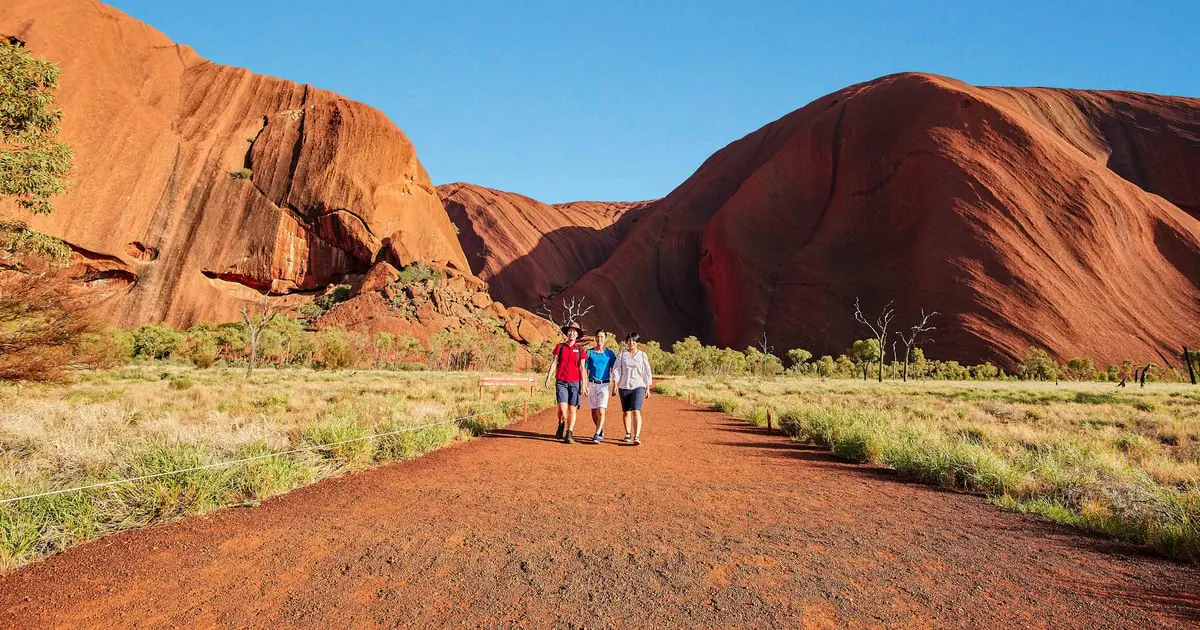
In the centre, the whole base walk with a guide in a group of up to 15. On the left, the same
loop by coach with a light breakfast. On the right, the Valley of the Winds, the park's hardest and finest walk,
between the domes of Kata Tjuta.
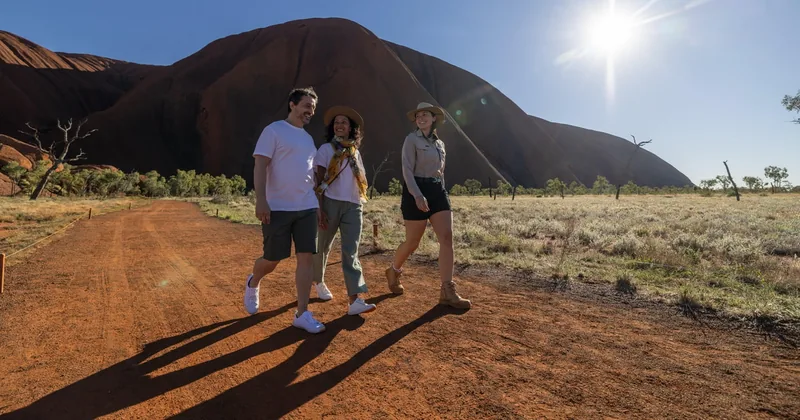
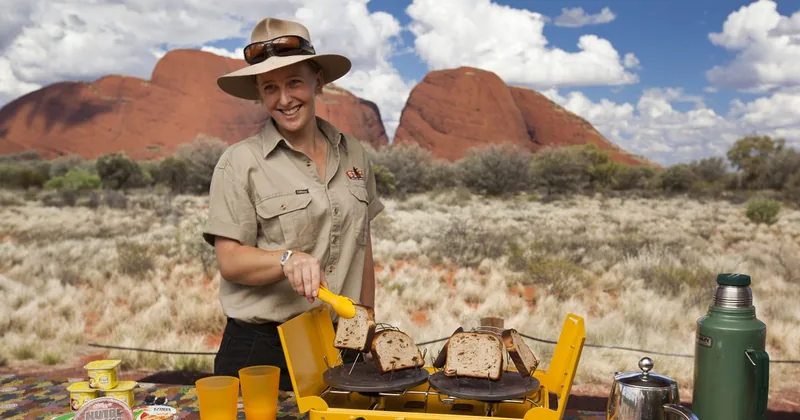
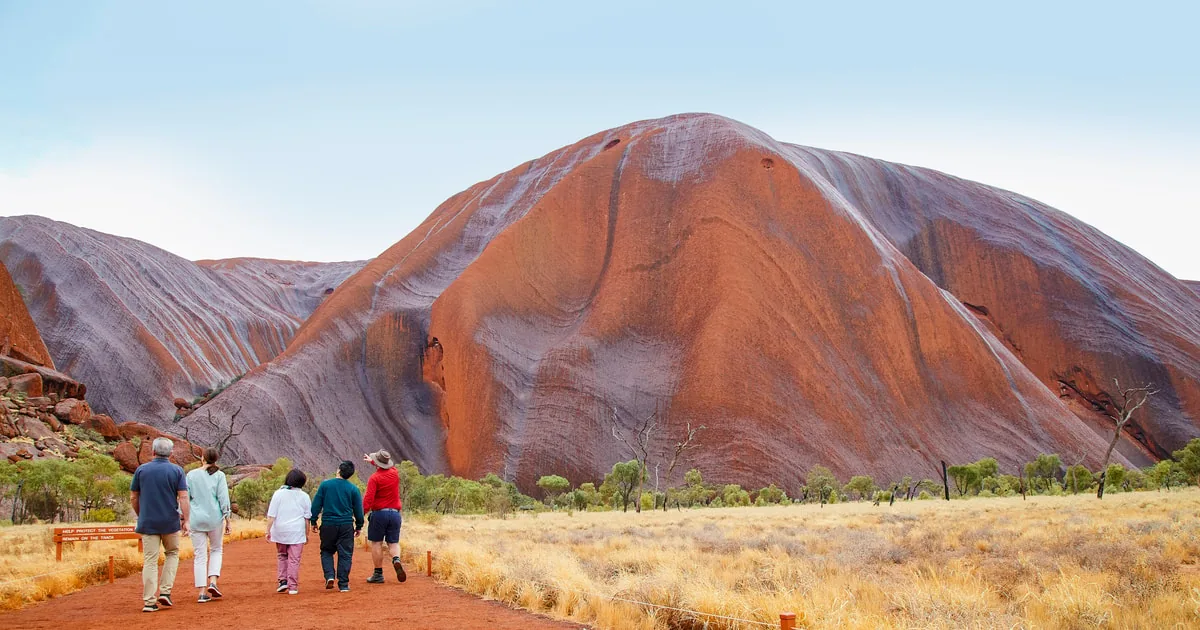
Sunrise over Uluru, then the base walk by the Mala and Lungkata sections with a guide who tells the Tjukurpa stories. A light breakfast is served on the way.
What's included
Sunrise viewing, then the walk around the base
Mala Walk, Kantju Gorge and the Lungkata story
Light breakfast with hot drinks
Air-conditioned coach from your hotel
Park pass not included: buy it online before the tour
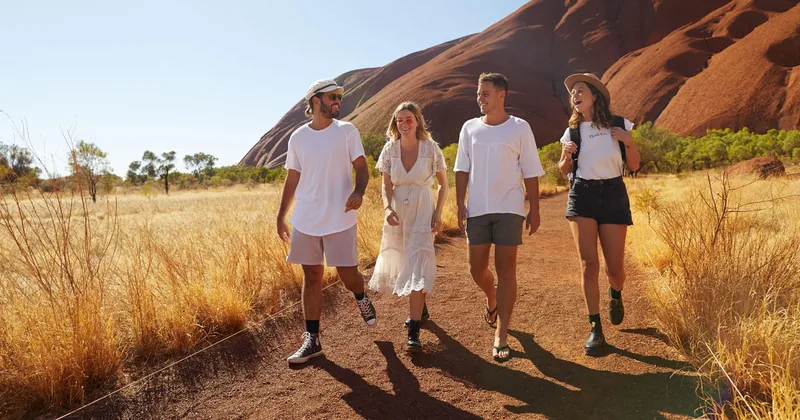
The whole base walk around Uluru with a guide, starting at sunrise, with a picnic breakfast on the way. Small groups of up to 15, hotel pickup included.
What's included
The full walk around the base of Uluru with a guide
The full Valley of the Winds loop between the domes of Kata Tjuta, the park's hardest walk, with a guide and morning tea. Rocky and uneven, with steep sections.
The first row is the baseline: the base walk is flat, signed and has water stations, so with a
hire car and a park pass you can walk it alone. Each tour below adds something: transport from the resort, a
sunrise start, breakfast, and a guide who tells the stories of the places you pass.
Option
Starts
Best for
Length
Rating
Cancel
On your own
Mala carpark, by hire car
Confident walkers with a car, a park pass and an early alarm
No day tour includes the park pass: everyone 18 and over buys one online or at the entry
station, and it covers 3 days. The ranger-guided Mala walk runs every morning from the Mala carpark and is
included with the pass.
What the tour pages don't tell you
You can walk Uluru on your own.
The base walk is a flat, well-signed 10.6 km loop on compacted gravel and short boardwalks, with water
stations, toilets and emergency call devices along the way. Rangers lead a walk on its Mala section every
morning, included with your park pass. Nobody needs a guide to find the way round.
What decides your day is transport and heat. The resort town of Yulara is about 20 minutes' drive
from the rock, with no taxis and no public transport: you need a hire car, the shuttle pass or a tour with
pickup. In the hot months you start at sunrise and finish by 11 am. A guide earns their place in the stories:
the Mala, Kuniya and Lungkata Tjukurpa told at the places they belong to.
2019
the year the climb closed for good, on 26 October, 34 years
to the day after the park was handed back to Anangu. Every walk here stays at ground level.
AnanguTjukurpaBase walkKata TjutaSunrise starts
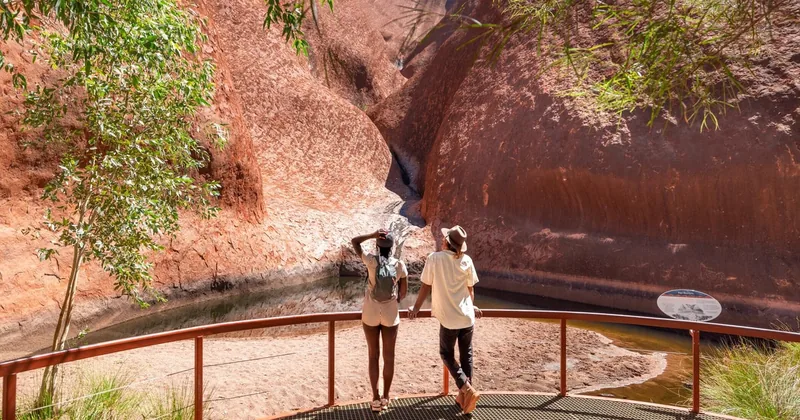
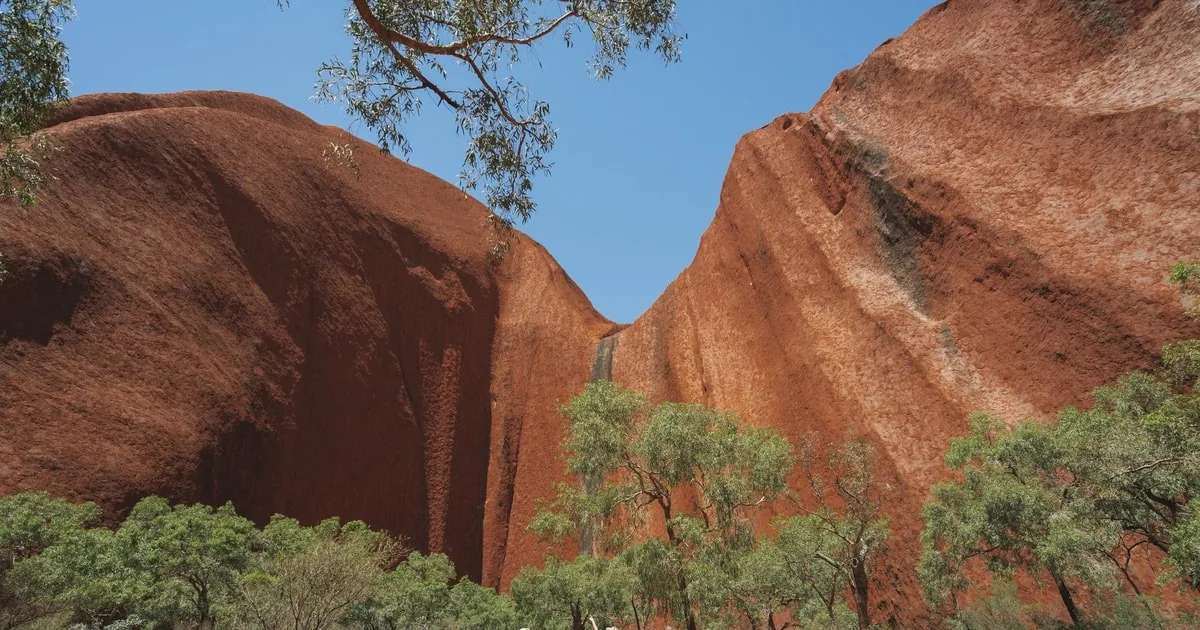
Kantju Gorge, at the end of the Mala walk.
01
Need a tour?
Not to walk. You need transport, a park pass and an early start; a guide adds the stories.
02
How long?
About 3.5 hours for the full base walk; the Mala and Kuniya walks take under two.
03
When?
May to September for walking weather; all year, start at sunrise.
04
What to carry?
1 litre of water per person per hour, a hat, a fly net and sturdy shoes.
Around the base
The loop in four sections
The base walk joins four named walks. Start at the Mala carpark at sunrise and go clockwise, as
the park recommends, and the shaded south side comes when the sun is high.
01
Mala walk
Caves, rock art and the tall walls of Kantju Gorge, where the Mala people's story is told. The rangers' guided walk runs here each morning.
2 km return
02
North-east face
The longest, most open stretch, set back from the rock. Signs mark sensitive sites where photos are not allowed.
4.4 km
03
Kuniya and Mutitjulu
A short path to Mutitjulu Waterhole, one of the few permanent waterholes, and the story of Kuniya and Liru.
1 km return
04
Lungkata walk
Close to the rock along the south side, past caves and nesting birds, with the story of the blue-tongue lizard man.
The tracks at both rocks, how to reach them, and what goes in your pack.
Base walk: 10.6 km loop, about 3.5 hours, grade 3; start at the Mala carpark.
Mala walk: 2 km return, 1.5 hours, to Kantju Gorge; the ranger-guided walk leaves at 8 am (October to April) or 10 am (May to September).
Kuniya walk: 1 km return to Mutitjulu Waterhole, 30 to 45 minutes.
Liru walk: 4 km return from the Cultural Centre to the rock through mulga woodland.
Talinguru Nyakunytjaku: the sunrise area, with two short loops, the Minymaku and Watiku walks.
Valley of the Winds: 7.4 km circuit, about 4 hours, grade 4, rocky with steep steps.
Karu Lookout: 2.2 km return, about an hour; the part that stays open on hot afternoons.
Karingana Lookout: 5.4 km return, about 2.5 hours, into the heart of the valley.
Walpa Gorge: 2.6 km return, about an hour, between two of the tallest domes.
Distance: Kata Tjuta is about 45 minutes' drive from the resort.
Fly: Ayers Rock Airport, 10 minutes from the resort; about 3 hours from Sydney.
Drive: about 465 km from Alice Springs, 5 to 5.5 hours on sealed roads.
To the rock: about 20 minutes' drive from the resort; no taxis, no public transport.
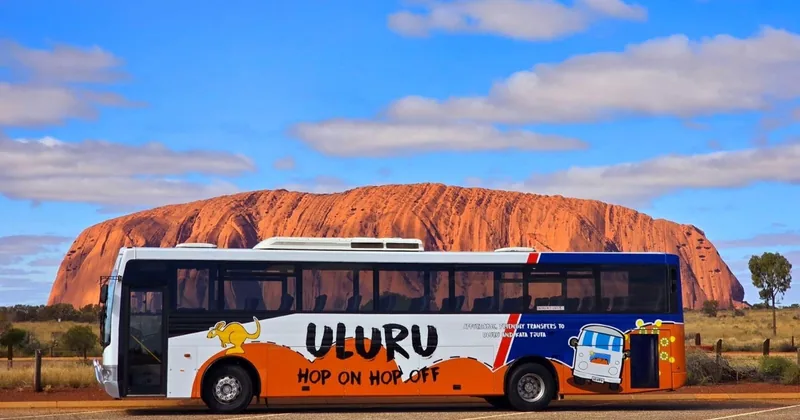
Without a car: the Hop On Hop Off shuttle pass or a tour with hotel pickup.
Park pass: required for everyone 18 and over, online or at the entry station.
Water: at least 1 litre per person per hour, and drink it; refill at the water stations.
Sun: a broad hat, sunscreen and a long-sleeved shirt.
Flies: a head net, especially from spring to autumn.
Feet: closed, broken-in walking shoes; the Kata Tjuta tracks are rocky.
Winter dawns: a warm layer; June and July mornings are close to freezing.
348 mUluruIts height above the surrounding plain.
10.6 kmBase walkThe full loop around the rock.
36DomesThe rock domes of Kata Tjuta.
1985HandbackThe park returned to Anangu on 26 October.
1987World HeritageListed for nature, then for culture in 1994.
465 kmFrom AliceThe drive from Alice Springs by road.
Where it starts
The Mala carpark, at the rock
Mala carpark, Uluru
Uluru-Kata Tjuta National Park, Northern Territory
The base walk and the Mala walk start at the Mala carpark on the ring road around the rock, about 20 minutes'
drive from the resort at Yulara through the park entry station. The ranger-guided Mala walk meets here every
morning. Guided tours pick you up at your hotel an hour or so before sunrise and bring you here or to the
Kuniya carpark on the south side. The Cultural Centre, with its displays, art galleries and cafe, is a few
minutes' drive back towards the entry station.
Great walk around the base of Uluru showing many different perspectives of the site. Max our guide was excellent and very knowledgeable. Total walk is about 12km but flat with breaks along the way.
★★★★★
I was tempted to do it on my own but am so thankful I didn't. The knowledge that Michelle (our guide) imparted was amazing and broke up the long walk. She gave a wonderful insight into the sacred sites, animals, composition and history of this site.
★★★★★
It was a stunning walk. Our guide Jackie, was wonderful. It was great to get the geological background and also learn about the local plants.
★★★★★
He had an uncanny grasp of the local language and culture which made our tour around the base of Uluru informative and authentic. At all times he was respectful of the Anangu's Tjukurpa and traditions around retelling of appropriate storylines.
★★★★★
A long walk but all very flat and achievable. Lots of local stories along the way to bring a greater appreciation for the local people and their connection to this wonder of nature.
★★★★★
Andrea was a great guide, who looked after us well and did a great job of explaining how Kata Tjuta was formed and its significance. Lovely to watch the sun rise over Kata Tjuta and, in the distance, Uluru.
★★★★★
Out of all the experiences we did on our trip, this was our favourite! Pete the guide is an amazingly knowledgeable and respectful guide about the local indigenous people. We felt so lucky to learn from Pete who is also a great storyteller.
★★★★★
I have a lot of trouble with hip pain and so walking isn't always possible. This was a fantastic alternative option. We really enjoyed our morning!
★★★★★
Made everything very easy to navigate and the drivers are all very caring, making sure you know each route, the bus times, and have plenty of water. The sunrise times are great as well, we did sunrise for both locations and would do it again.
Before or after a walk
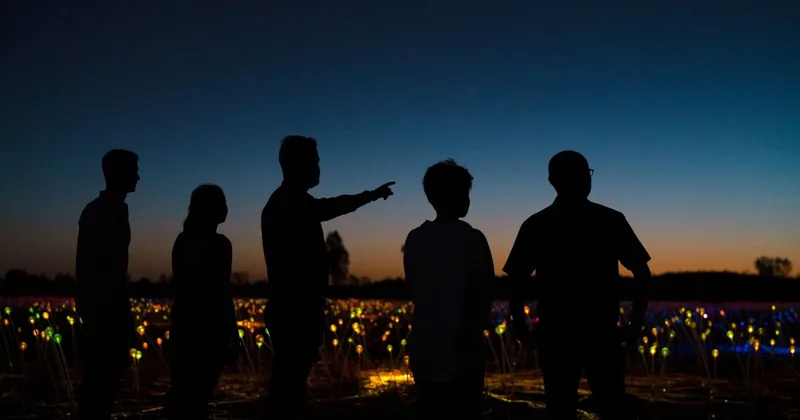
The Field of Light
On the morning you rest your legs, or before a short walk, the most-reviewed experience near the
rock is not a walk at all: sunrise over Uluru from the dune above Bruce Munro's field of lights.
Field of Light Sunrise Tour
★ 4.6 · 675 reviews · GetYourGuide
Before a morning walk, or on the day you rest your legs: walk in the dark among 50,000 solar-lit stems of Bruce Munro's Field of Light, then climb the dune-top platform to watch the sun rise behind Uluru with a hot drink in your hand. Transfers from the resort are included. Full refund if you cancel up to 24 hours ahead.
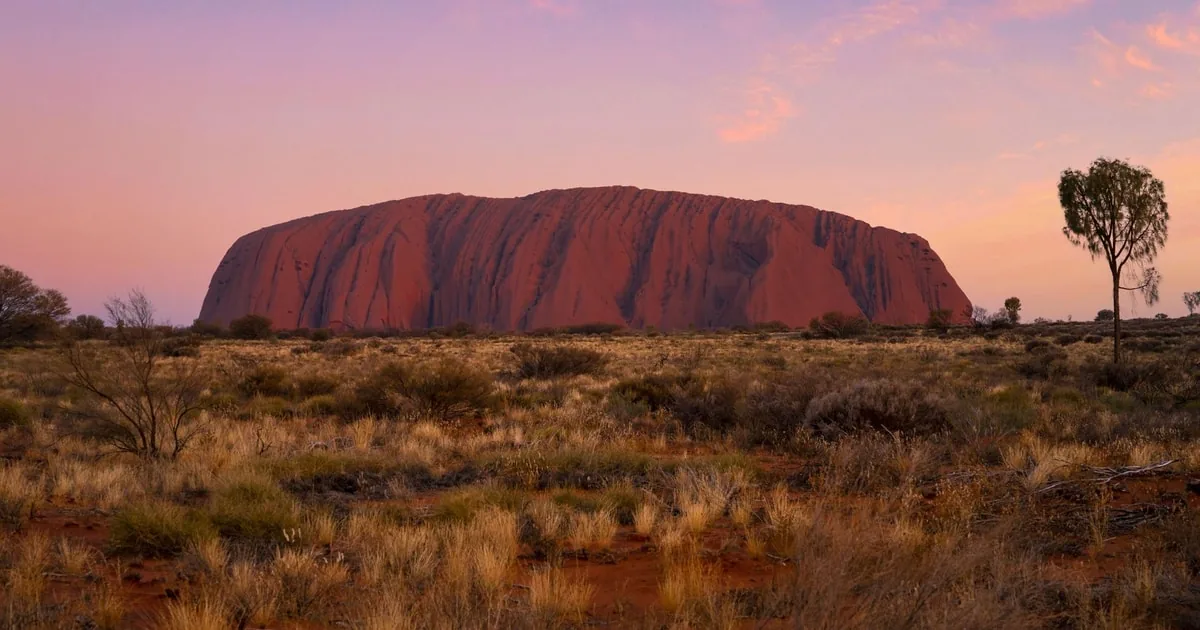
Uluru rises 348 m above a flat red plain, a single mass of arkose sandstone about 9.4 km around.
For Anangu, the Traditional Owners, it is a place of Tjukurpa, the law and the stories that explain how the land
was made. Walking around its base, slowly and at ground level, is how Anangu ask visitors to see it.
The base walk, section by section
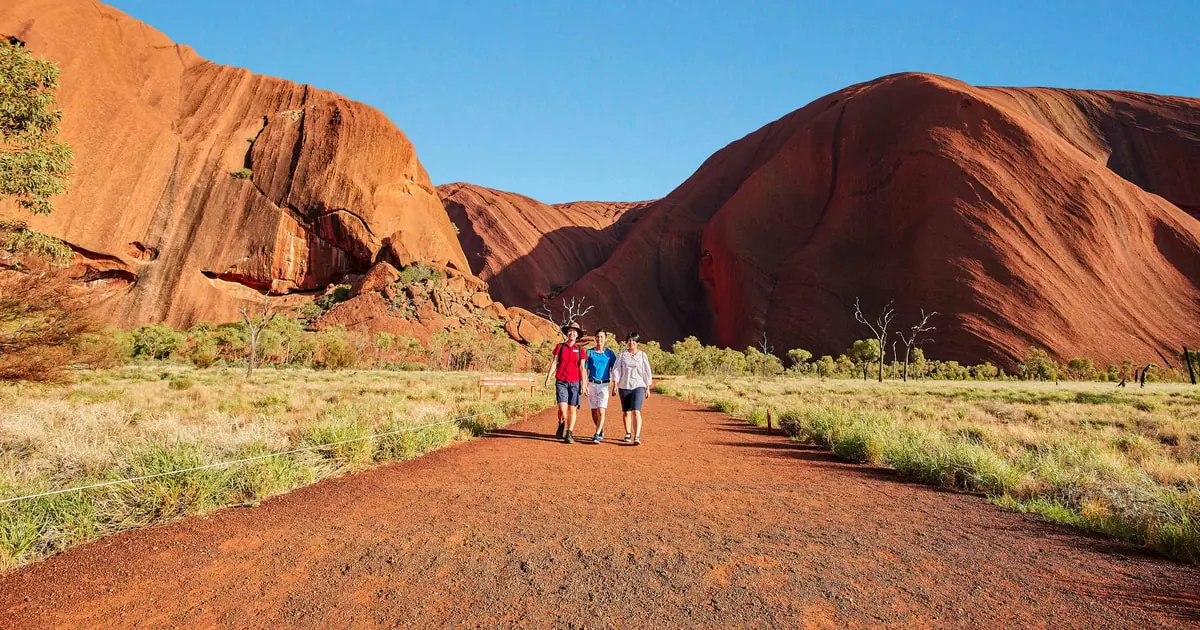
The full loop is 10.6 km and takes about three and a half hours at a steady pace. It is made of four named
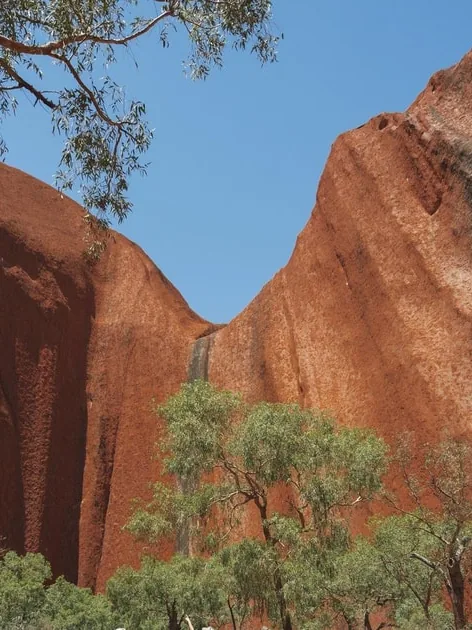
walks. The Mala walk leads from the Mala carpark past caves with rock art to Kantju Gorge, where the walls meet
high above a waterhole that fills after rain. The North-east walk is the longest and most open stretch, set back
from the rock; along it, signs mark sensitive sites where Anangu ask that no photos are taken. On the south side,
the short Kuniya walk leads into Mutitjulu Waterhole, one of the few permanent waterholes in the park and the
setting of the story of Kuniya, the woma python woman, and Liru, the brown snake man. The Lungkata walk then runs
close to the rock back towards Mala, past caves and nesting birds; this is where you can feel the texture of the
rock under your hand. The Liru walk links the loop with the Cultural Centre.
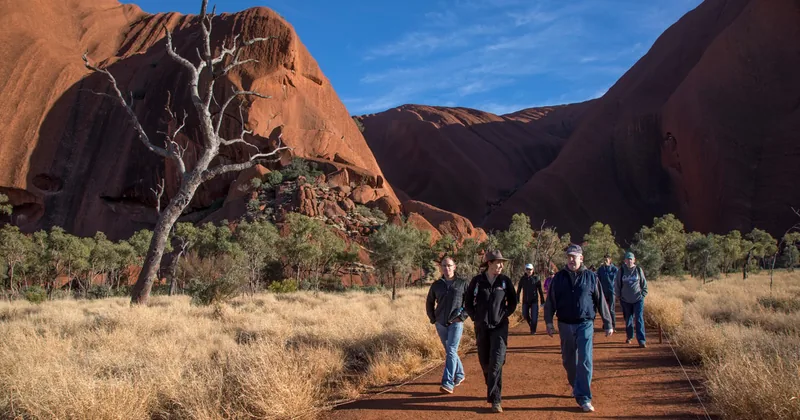
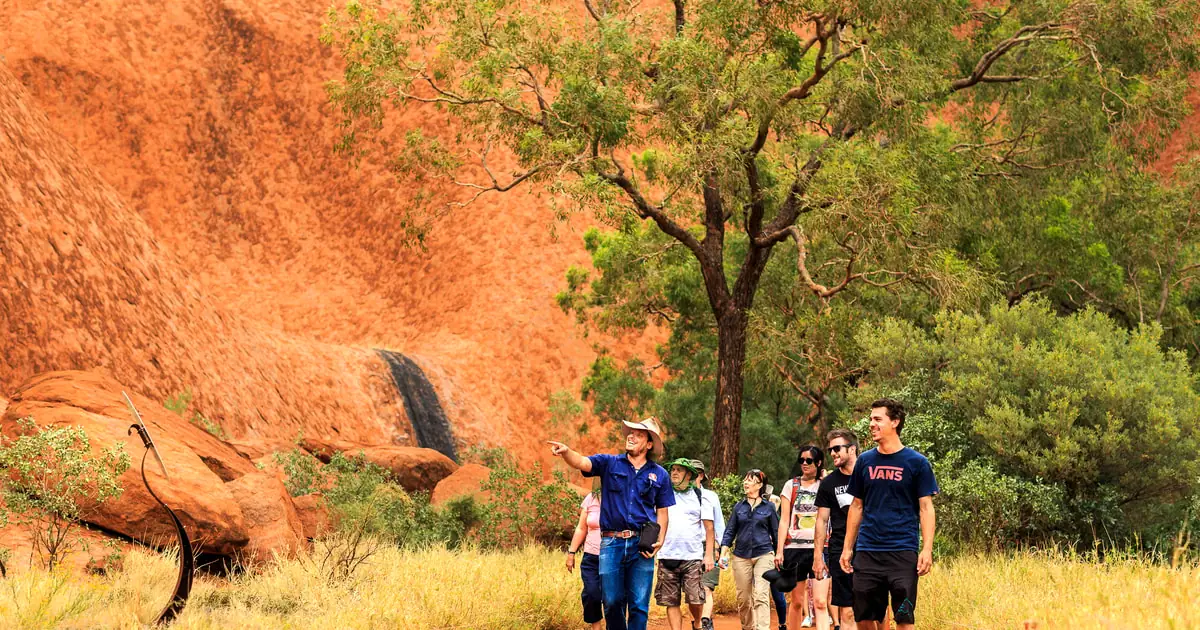
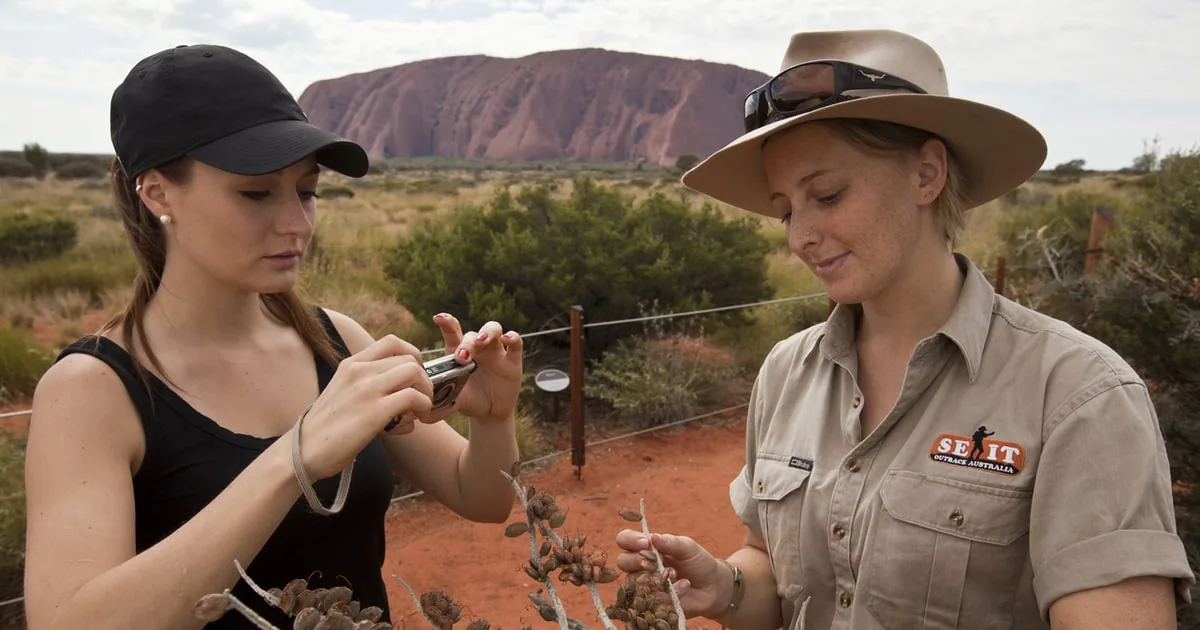
Plants, geology and stories: what a guide adds on the base walk.
Heat, water and the 11 am rule
The track is flat, on compacted gravel with short boardwalks, and graded 3 of 5 only for its length. What makes
it hard is the sun. The park asks every walker to carry and drink at least 1 litre of water per person per hour,
and in the warm months to walk only in the cool of the morning and finish by 11 am. Water stations and emergency
call devices stand along the loop. At Kata Tjuta, the Valley of the Winds closes beyond Karu Lookout from 11 am on
days of 36 °C or hotter, and some Uluru sections close on the hottest afternoons.
The honest small print: you do not need a tour to walk Uluru. You need a way to get there,
a park pass, water and an early start. A guided walk is worth it if you have no car, if you want sunrise and
breakfast arranged, or if you want the Tjukurpa stories told at the places they belong to. If you walk alone,
join the ranger-guided Mala walk: it is included with your pass.
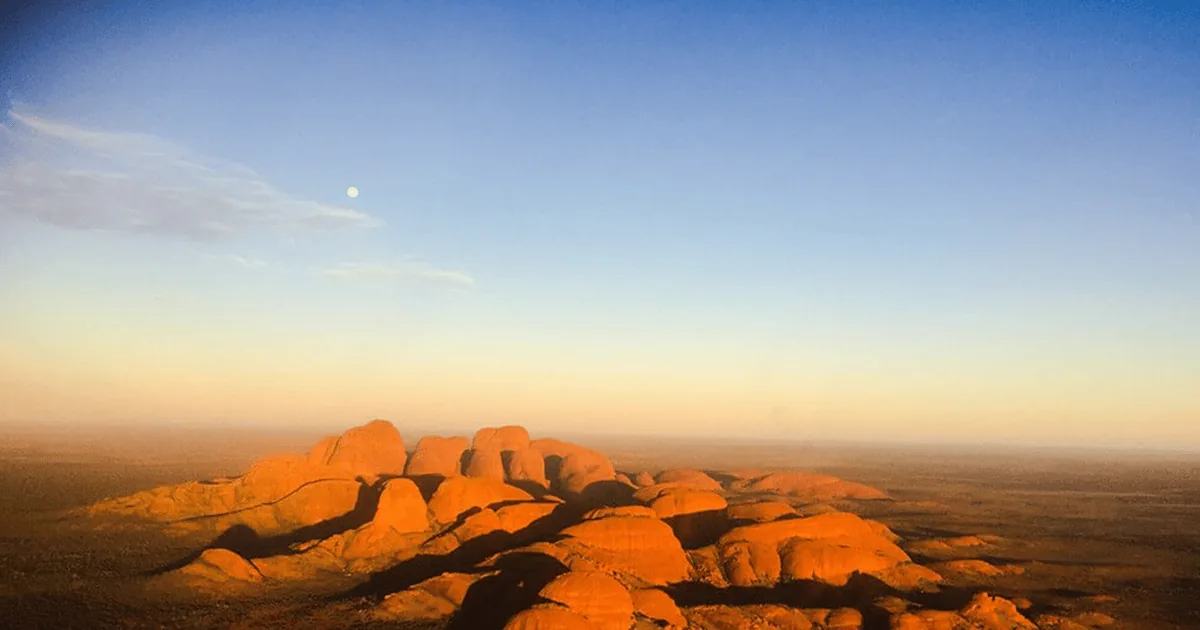
Kata Tjuta and the Valley of the Winds
About 45 minutes' drive west of the resort, the 36 domes of Kata Tjuta rise higher than Uluru, the tallest
546 m above the plain. The Valley of the Winds circuit is 7.4 km of rocky track with steep steps, graded 4, and
takes about four hours; its two lookouts, Karu and Karingana, look deep between the domes. Walpa Gorge is the
shorter choice: 2.6 km return between two of the tallest domes, about an hour. Start either at sunrise, after
the view from the dune viewing area.
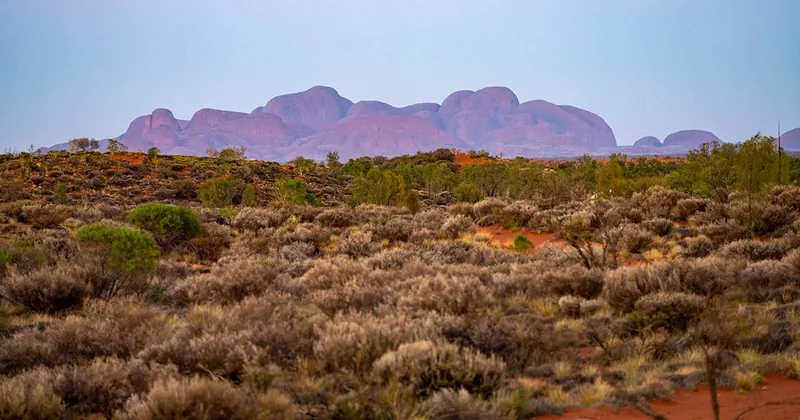
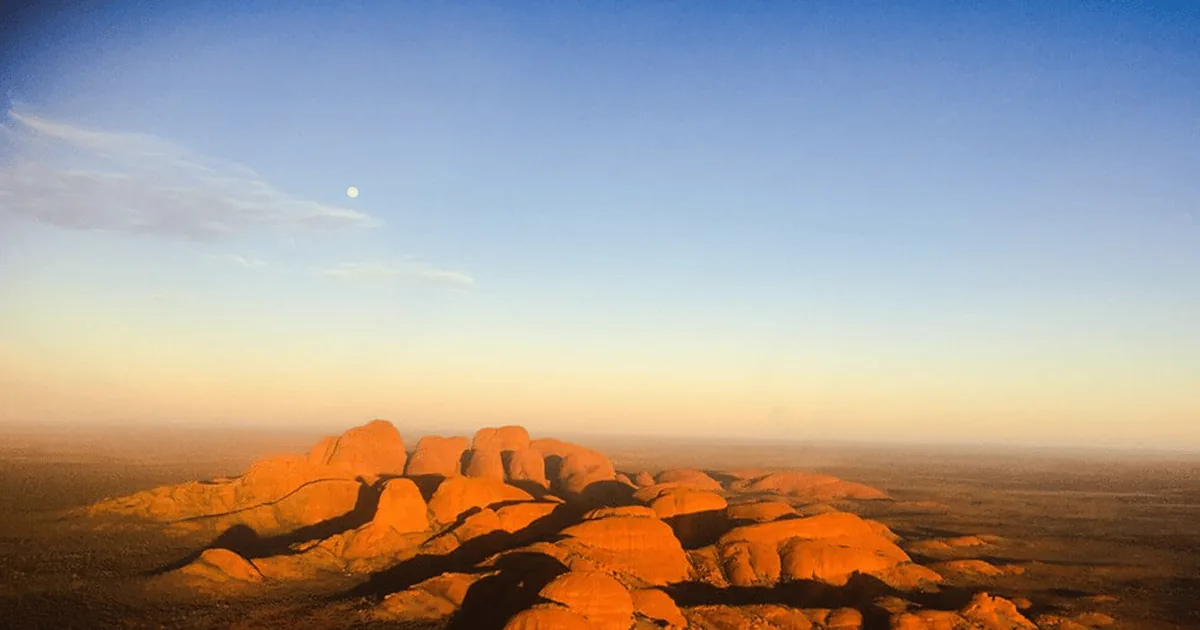
Kata Tjuta at sunrise, about 45 minutes' drive from the resort.
The rules, and why the climb closed
The climb closed permanently on 26 October 2019, 34 years to the day after the park was handed back to Anangu.
Climbing is now an offence, and rangers can issue penalties. The other rules are simple: everyone 18 and over
needs a park pass; stay on the marked tracks; no drones, no pets and no camping in the park; no swimming in the
waterholes; and no photos at the signed sensitive sites. The park gates open before sunrise and close after
sunset, with the times changing by month.
How long to stay
Two to three full days is the right length. One morning for the base walk and the Cultural Centre, one for
Kata Tjuta and the Valley of the Winds, and time for a sunrise, a sunset and perhaps the Field of Light. You can
see Uluru in one day from the resort, and day tours come all the way from Alice Springs, about 465 km each way,
but those leave little time to walk.
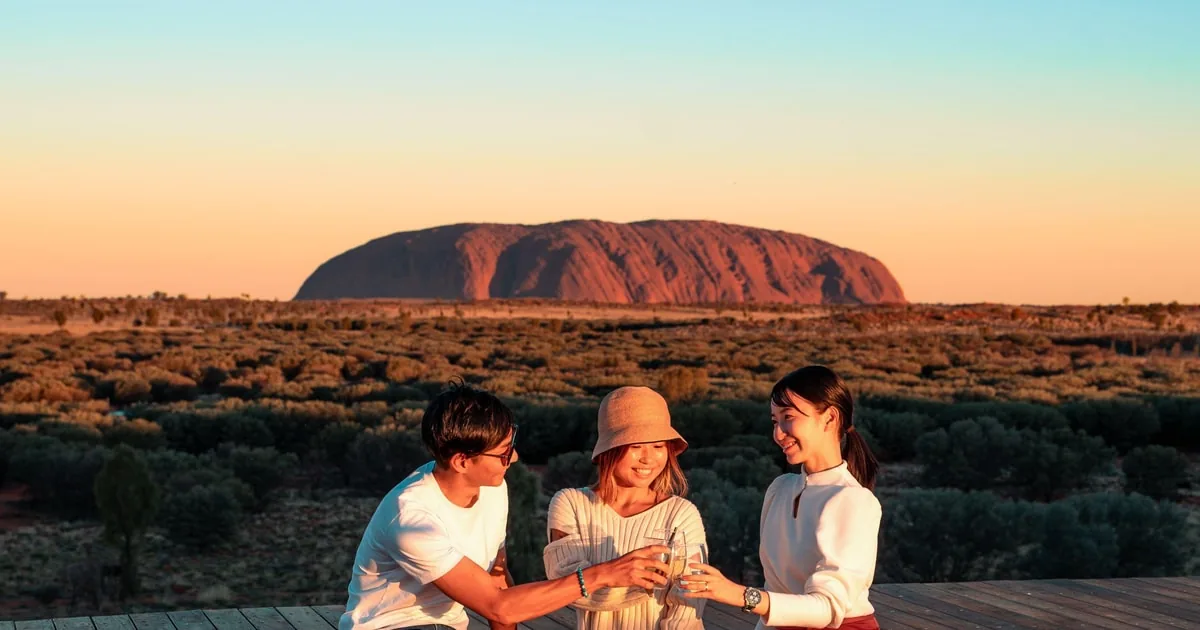
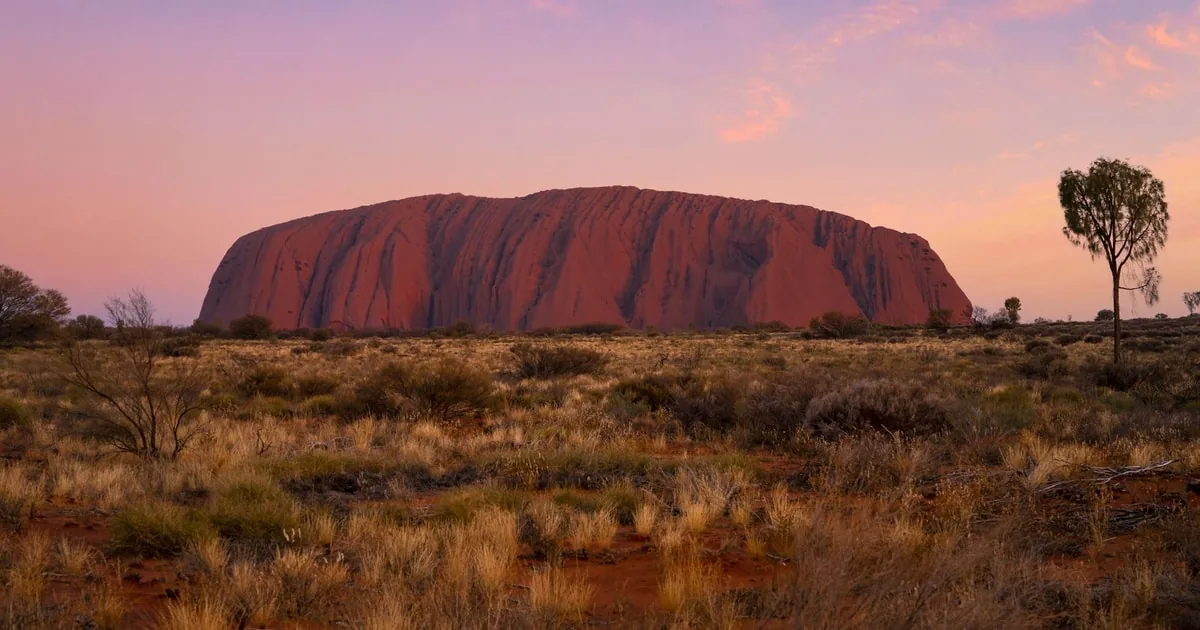
An evening at the rock: plan a sunset for every day you stay.
Straight answers to what visitors ask most about walking at Uluru.
Can I walk around Uluru without a guide?
Yes. The base walk is a flat, well-signed 10.6 km loop with water stations and toilets along the way, and you can walk it on your own with a park pass. A ranger-guided Mala walk also runs every day, included with the pass. The catch is getting there: without a hire car you need a tour or the shuttle pass. All of it in the base walk guide.
How long does it take to walk around the base of Uluru?
About 3.5 hours for the 10.6 km loop at a steady pace; allow 3 to 4 hours with stops. Guided walks take longer, 5 to 6 hours from hotel pickup, because they include sunrise, breakfast and time for the stories.
How difficult is the Uluru base walk?
It is flat and easy underfoot, on compacted gravel and short boardwalks, and graded 3 of 5 only for its length. The hard part is the heat: in the warm months start at sunrise, carry at least 1 litre of water per person per hour and finish by 11 am.
What is the best walk to do at Uluru?
For most people, the full base walk: it shows every side of the rock, the gorges, the waterholes and the rock art. With only an hour or two, do the Mala walk to Kantju Gorge (or join the ranger-guided Mala walk) and the short Kuniya walk to Mutitjulu Waterhole. At Kata Tjuta, the Valley of the Winds is the finest walk in the park. Every walk side by side in the walks compared.
Can you still touch Uluru?
Yes, where the open tracks run beside it; the park itself invites you to feel the rock on the Lungkata section. Stay on the marked tracks, do not climb onto boulders, and do not touch rock art or enter signed sacred areas.
Can you take photos at Ayers Rock?
Almost everywhere, yes. Signs mark the culturally sensitive sites where photos are not allowed, and Anangu ask that the north-east face is only photographed in wide shots from a distance. Always ask before photographing people, and leave the drone at home: drones are banned in the park. More in the park rules.
What happens if I climb Uluru?
You break the law. The climb closed permanently on 26 October 2019 at the request of Anangu, the Traditional Owners, and climbing is now an offence under the Environment Protection and Biodiversity Conservation Act; rangers can issue penalties. Every walk on this site stays at ground level.
What are the current rules for visiting Uluru?
Everyone 18 and over needs a park pass, bought online or at the entry station. Stay on marked tracks, no climbing, no drones, no pets, no camping inside the park, no swimming in the waterholes, no photos at signed sensitive sites, and alcohol only at the car and bus sunset areas. The park gates open before sunrise and close after sunset, with times changing by month.
What is the best month to go to Uluru?
May to September, when days are usually between 20 and 30 °C and good for walking; nights in June and July can drop close to freezing. April and October are warm shoulder months. December to February average about 37 °C, with flies and hot-day track closures. Month by month in the best time to visit.
How many days in Uluru is enough?
Two to three full days. That covers a sunrise, the base walk, the Cultural Centre, a sunset, and a morning at Kata Tjuta for the Valley of the Winds. The park itself suggests at least three. Plans in how many days you need.
Can you do Uluru in one day?
Yes, but it is a long day. From the resort you can fit sunrise, the base walk, the Cultural Centre and sunset. Day tours from Alice Springs drive about 465 km each way, so you spend most of the day on the road for a few hours at the rock.
How far is it from Sydney to Uluru?
About 3 hours by direct flight to Ayers Rock Airport, 10 minutes from the resort. By road it is roughly 2,800 km, several days of driving through the outback. Routes and options in getting to Uluru.
Ready to go
Sunrise, the base walk, then breakfast.
Instant confirmation on GetYourGuide, with the refund terms shown on every option.

 Most reviewed
★ 4.65.5 hours316 reviews
Most reviewed
★ 4.65.5 hours316 reviews