Booking choice: The guided base walk, ★ 4.8 (270). Check dates Compare the options below
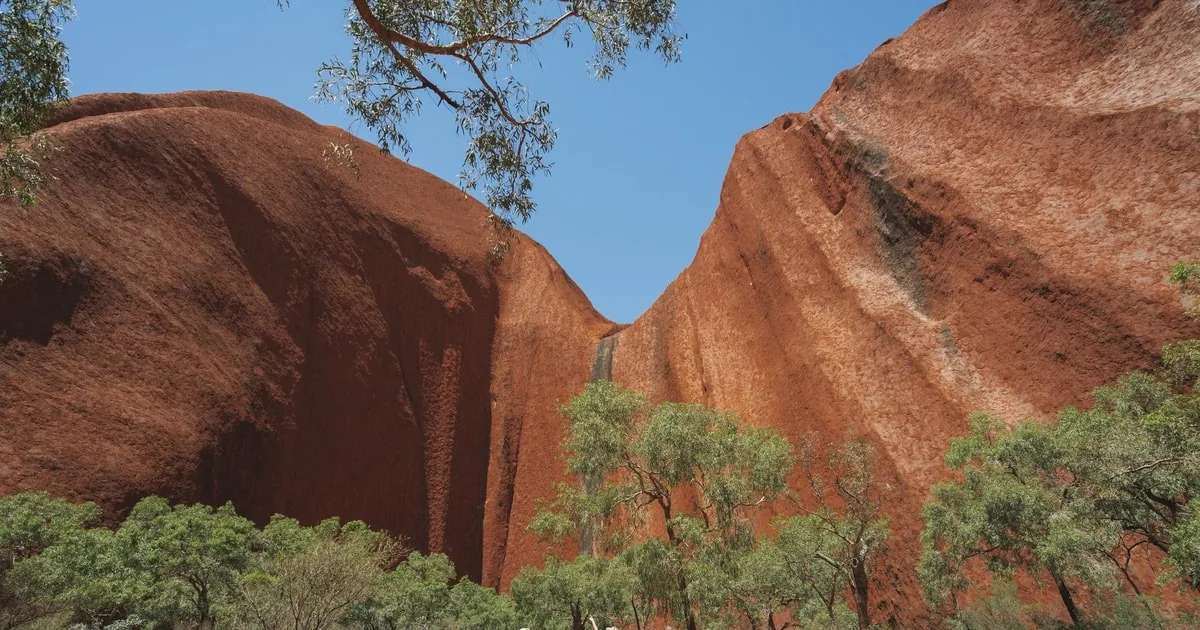
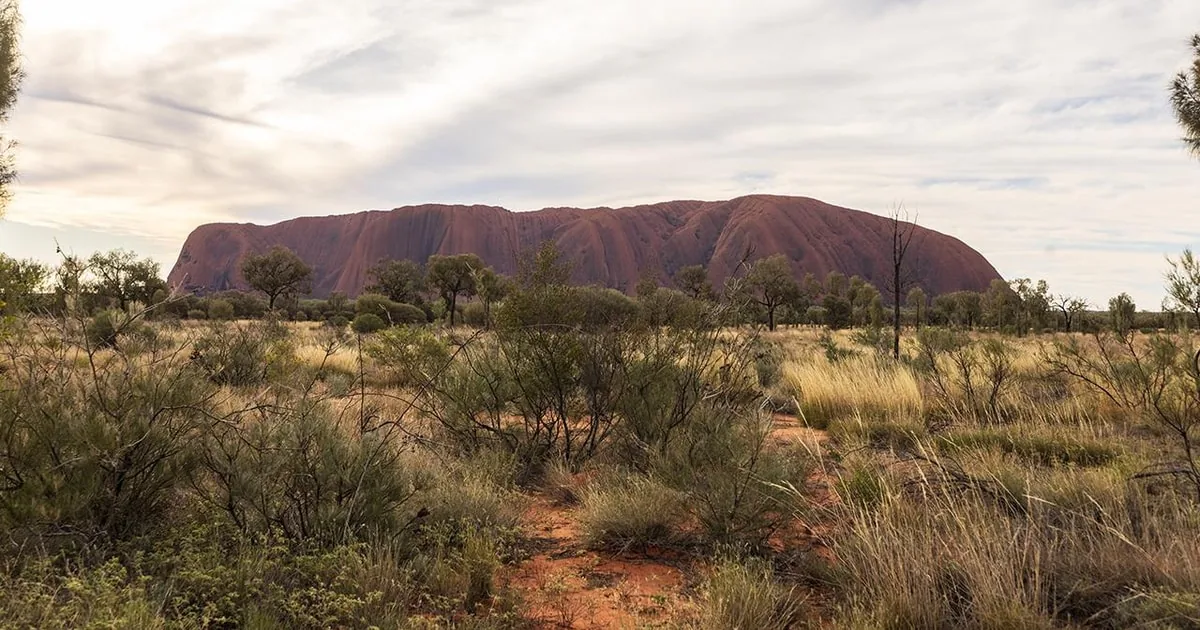
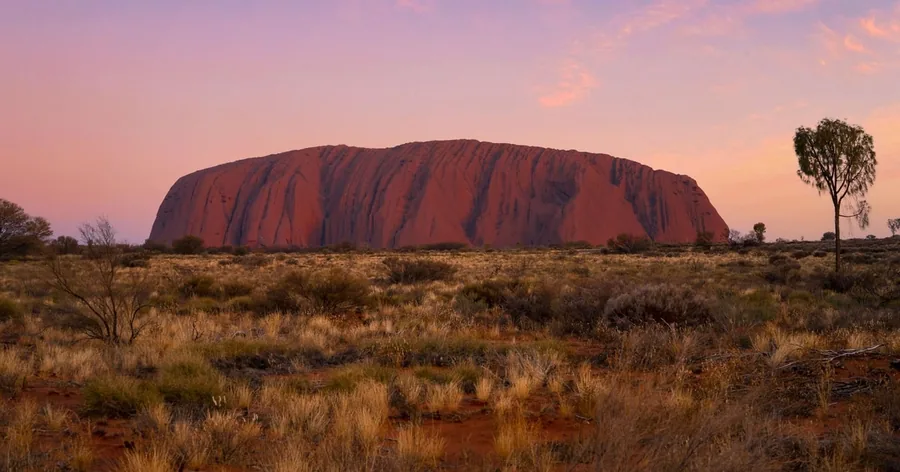
Walking all the way around Uluru is the single best thing you can do in the park. From the lookouts the rock looks smooth and simple; at its foot you find caves with rock art, waterholes, deep folds in the red walls, groves of desert oak and mulga, and signs that tell you the Tjukurpa stories Anangu have shared with visitors. The rock is about 9.4 km around; the loop is 10.6 km, because the track does not hug the rock everywhere and moves away from it in places.
This guide covers how long the walk takes, what you see on each section, how hard it is, where to start, what to carry, and whether you need a guide (you don't, but a good one adds a lot). For the other walks in the park, see the best walks at Uluru and Kata Tjuta; for the park rules, the Uluru rules.
The quick answer
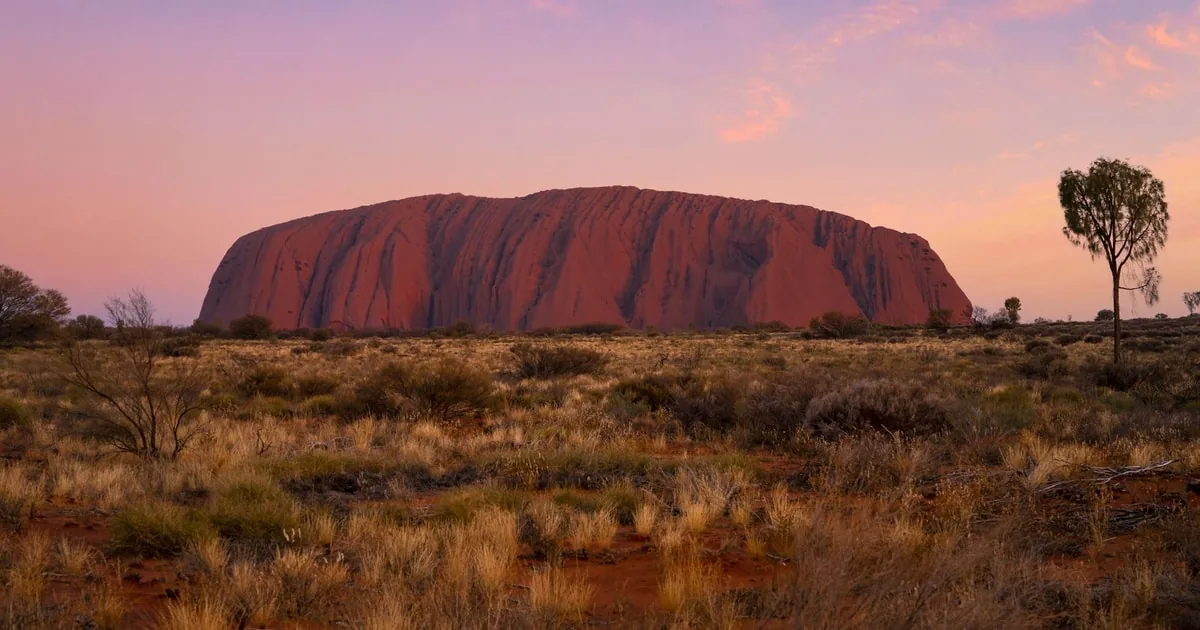
The base walk is a 10.6 km loop, flat and well marked, graded 3 by the park and walked in about 3.5 hours (allow 3 to 4, more with long stops). Start at the Mala carpark as close to sunrise as you can and walk clockwise: the Mala section to Kantju Gorge, the long North-east section, the Kuniya section past Mutitjulu Waterhole, then the Lungkata section back to Mala. There are water stations and emergency call devices along the way. Carry and drink at least 1 litre of water per person per hour, wear a hat, sturdy shoes and a fly net, and in the hot months finish by 11 am. You do not need a guide: the ranger-guided Mala walk is included with your park pass, and the rest is signposted. A guided tour adds hotel transport, a sunrise start, breakfast and the stories.
How long does it take to walk around the base of Uluru?
About 3.5 hours for the full 10.6 km loop at a steady pace, and 3 to 4 hours for most people. Add an hour if you stop at every sign and cave, and expect a guided tour to take 5.5 to 6 hours including sunrise and breakfast.
The park's own figure is 3 hours 30 minutes, which assumes a normal walking pace with short stops. Fit walkers who keep moving finish in under 3 hours; families and photographers often take closer to 4 and a half. The time on the track is less important than the time on the clock: in the warm months the park strongly recommends not walking after 11 am, so if you want a relaxed 4-hour walk, you need to be on the track by 7 am.
Watches and phones often record more than 10.6 km. Guided groups step off the loop to the waterhole viewing platforms, the rock art shelters and Kantju Gorge, and reviewers of guided base walks mention 12 km, and in one case just over 14 km, with plenty of breaks. That is still flat walking; it just takes longer.
What will you see on each section of the base walk?
Four sections make up the loop: Mala, North-east, Kuniya and Lungkata. The Liru walk is a separate 4 km return link from the Cultural Centre to the rock. Each has its own character, from rock art and gorges to long open plains.
Walking clockwise from the Mala carpark, you start with the busiest and most sheltered section and do the long, exposed North-east stretch while the air is still cool. The south side, with Mutitjulu Waterhole and the Lungkata section, comes later, when the rock itself throws some morning shade. The figures below are the park's published lengths for each named walk. Some are measured as return walks from a carpark, so they do not add up exactly to 10.6 km; use them to judge effort and time, not as a running total.
Signs along the track tell the stories Anangu share publicly: the Mala (rufous hare-wallaby) people at Mala, Kuniya the woma python woman and Liru the brown snake man at Mutitjulu, and Lungkata the blue-tongue lizard man on the south side. Signs also mark culturally sensitive sites where photos are not allowed. Put the camera away where the signs ask, and read the Uluru rules before you go.
| Section | Distance | Time | What you see |
|---|---|---|---|
| Mala walk (start, Mala carpark) | 2 km return to Kantju Gorge | About 1.5 hours | Caves with rock art, the Mala story, Kantju Gorge with its high walls and seasonal waterhole; ranger walk every morning |
| North-east walk (Kitchen Cave to Kuniya Piti) | 4.4 km one way | About 1 hour 45 minutes | The longest, most open stretch, set back from the rock; wide views, spinifex and desert oaks; water and a call device, no toilets |
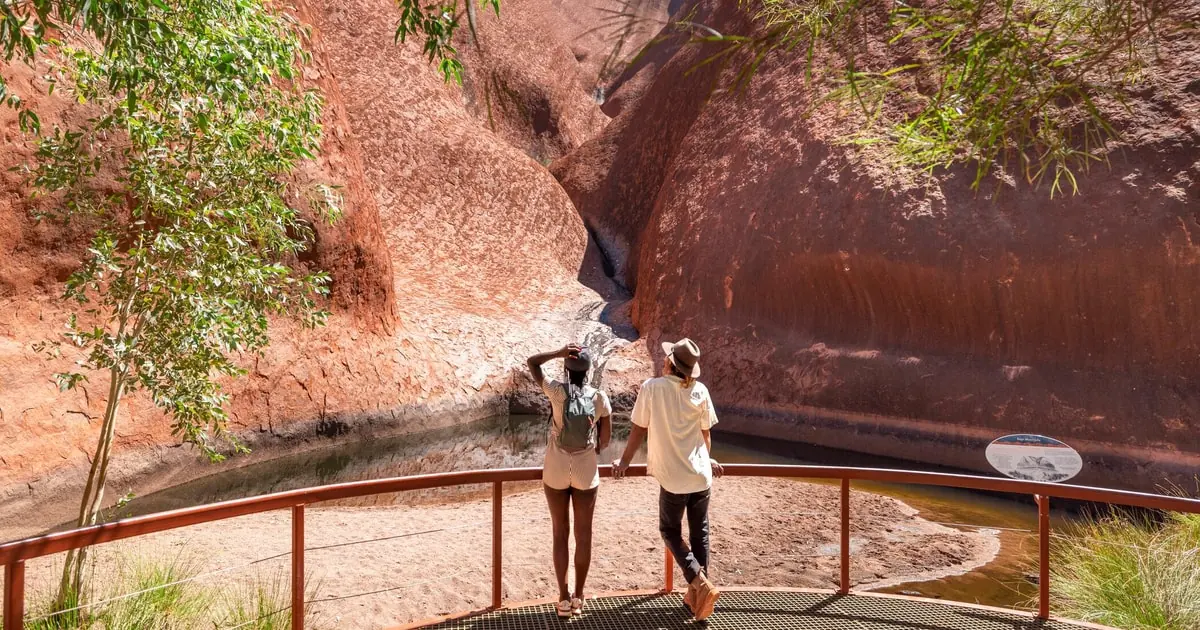
| Kuniya walk and Mutitjulu Waterhole | 1 km return from the Kuniya carpark | 30 to 45 minutes | A permanent waterhole under curved walls, the Kuniya and Liru story, rock art in a shelter; waterfalls after rain |
| Lungkata walk (Kuniya to Mala) | About 4 km (park figure) | About 1.5 hours | The track close to the rock, caves and nesting birds, the story of Lungkata; the best place to touch the rock |
| Liru walk (link from the Cultural Centre) | 4 km return | About 1.5 hours | Mulga woodland, a shade shelter, flowers after rain; quieter than the loop |
How difficult is the Uluru base walk?
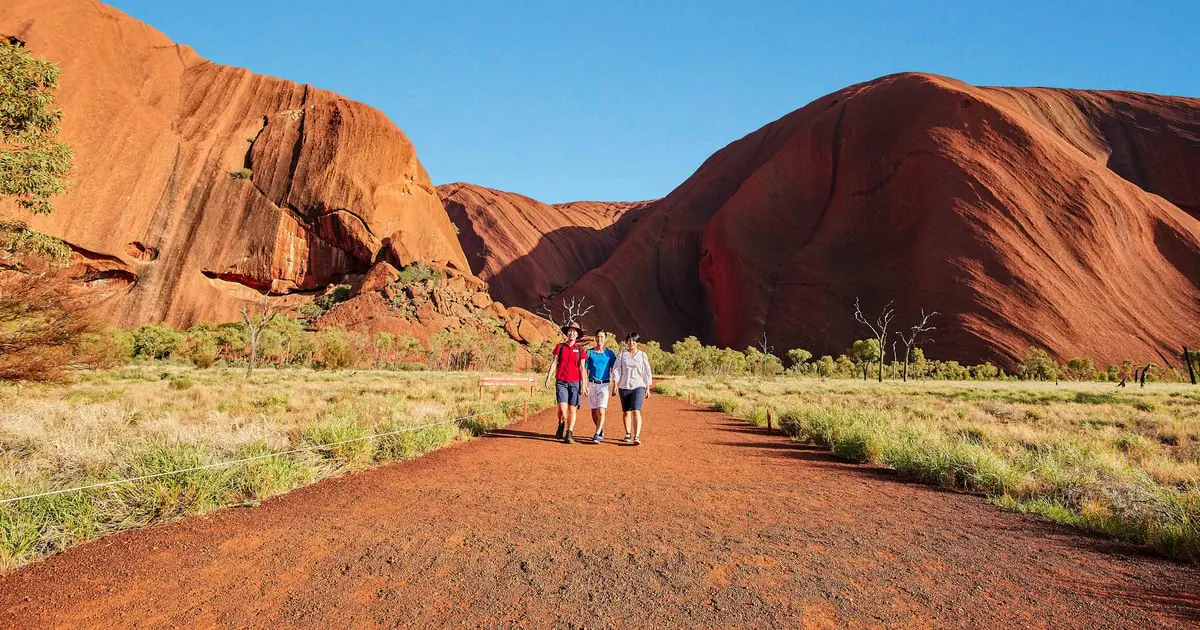
Easy underfoot, demanding only in the heat. The park grades it 3 because of its length, but the track is flat, wide and well signposted, with no steps worth mentioning; anyone who can walk 10 km on a level path can do it.
The surface is compacted red earth and fine gravel, unsealed but firm, with boardwalks and small bridges over creek lines on the Mala and Kuniya sections. There are no hills. After heavy rain a few low spots can be waterlogged for a day or two, and reviewers of the sunrise tours mention walking around puddles on one section. Sturdy walking shoes or trainers are enough; you do not need hiking boots.
What makes it tiring is exposure. The North-east section in particular runs across open ground with scattered shade, and the rock radiates heat back at you by late morning. From October to March, mean maximums are above 32 °C and often much higher, and the park closes parts of the loop on the hottest days. In winter the same walk is a pleasure: cool air, low sun and long shadows. When to come is covered month by month in the best time to visit Uluru.
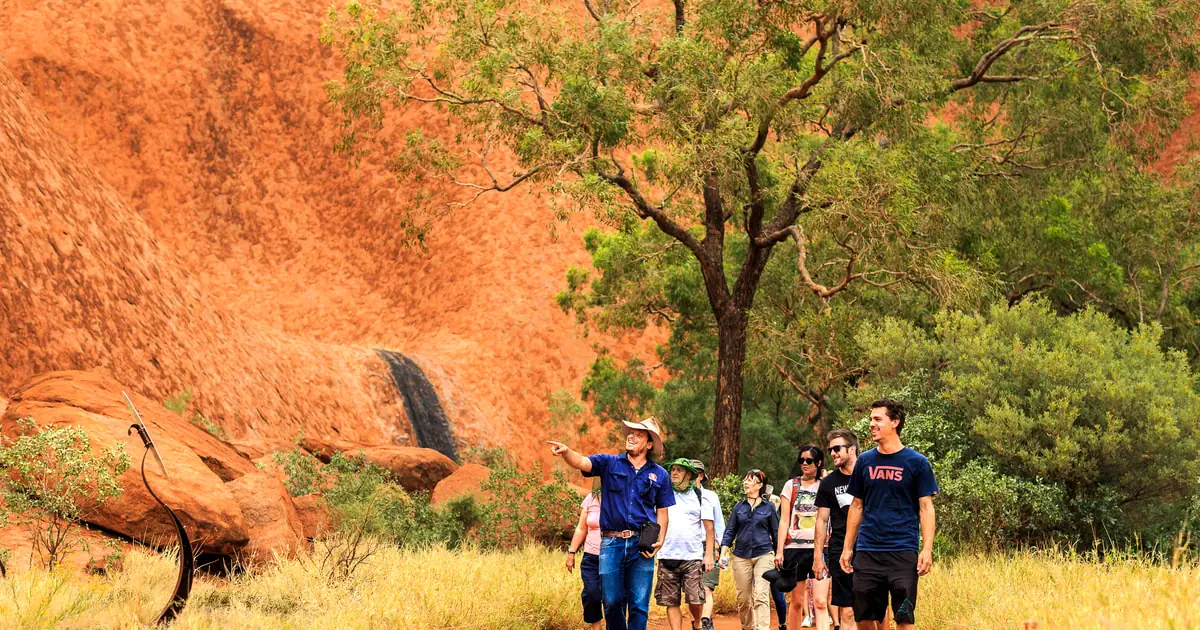
Where does the base walk start, and which way should you go?
Start at the Mala carpark on the north-west side of the rock and walk clockwise, as the park recommends. Be on the track as soon after sunrise as you can, while the air is cool.
The Mala carpark is about 20 minutes' drive from the resort at Yulara, past the park entry station, where you show or buy your park pass. The gates open between 5 am and 6:30 am depending on the month (the full list is in the Uluru rules). You can also start at the Kuniya carpark or walk in on the Liru track from the Cultural Centre, but starting at Mala puts you on the open North-east section while it is still cool.
Without a hire car, there are no taxis or public transport to the rock. The Hop On Hop Off shuttle pass runs between the resort hotels and the rock from sunrise to sunset, which is enough for a self-guided base walk: take an early shuttle, walk the loop, and ride back to the resort before the heat. How to reach Yulara in the first place is in getting to Uluru.
Unlimited shuttle rides from the resort hotels to Uluru from sunrise to sunset, plus a return trip to Kata Tjuta: the budget way to walk the base on your own.
Check dates for the hop on hop off passWhat should you carry, and how do you deal with heat and flies?
At least 1 litre of water per person per hour, a hat, sunscreen, sturdy shoes and a fly net. Refill at the water stations, start at sunrise and, in the hot months, finish by 11 am.
- Water: the park's rule is to carry and drink at least 1 litre per person per hour. For the full loop that means 3 to 4 litres each; carry 2 and refill at the water stations along the track.
- Sun: a broad-brimmed hat, sunscreen and sunglasses. Long, light sleeves are cooler than bare skin in full sun.
- Shoes: closed walking shoes or trainers with some grip; the surface is gravel and red dust.
- Fly net: bush flies are thick from late spring to autumn. A head net that fits over your hat makes the walk far more pleasant; head nets are sold locally if you forget one.
- Snack: there is nothing to buy at the rock; the Cultural Centre cafe is the nearest food.
- Layers in winter: dawn in June and July can be close to freezing, so pack a warm top.
Emergency call devices are placed along the track, and there are toilets along the way, though none on the North-east section. In the hot months the park strongly recommends not walking after 11 am, and some sections, including the North-east walk, close from 11 am on days of 40 °C or more. Walk with a companion, obey any closure signs, and turn back early if you run low on water.
Can I walk around Uluru without a guide?
Yes. The loop is signposted all the way, with interpretive signs at the main sites, and the ranger-guided Mala walk runs every day, included with your park pass. A paid tour adds transport, a sunrise start, breakfast and a guide who tells the stories as you walk.
The ranger-guided Mala walk runs daily from the Mala carpark (8 am from October to April, 10 am from May to September), lasts about 1.5 hours over an easy 2 km return, is wheelchair accessible and needs no booking. A park ranger explains the Mala story, the rock art and how Anangu lived around the rock. Do it first, then carry on around the loop on your own.
A paid guided base walk is worth it if you have no car or want the whole loop explained. The small-group guided base walk (4.8 from 270 reviews) collects you about an hour before sunrise, keeps groups to 15, walks the full loop and serves a picnic breakfast on the way; audio guides are offered in French, German, Spanish, Italian, Russian and Mandarin. Reviewers describe a pace slow enough for everyone, with frequent breaks for stories. The coach sunrise walk (4.6 from 316) covers the Kuniya Piti area, the Mala walk and Kantju Gorge and the Lungkata section, with a light breakfast halfway; one reviewer wrote that they had been tempted to go alone and were glad they had not.
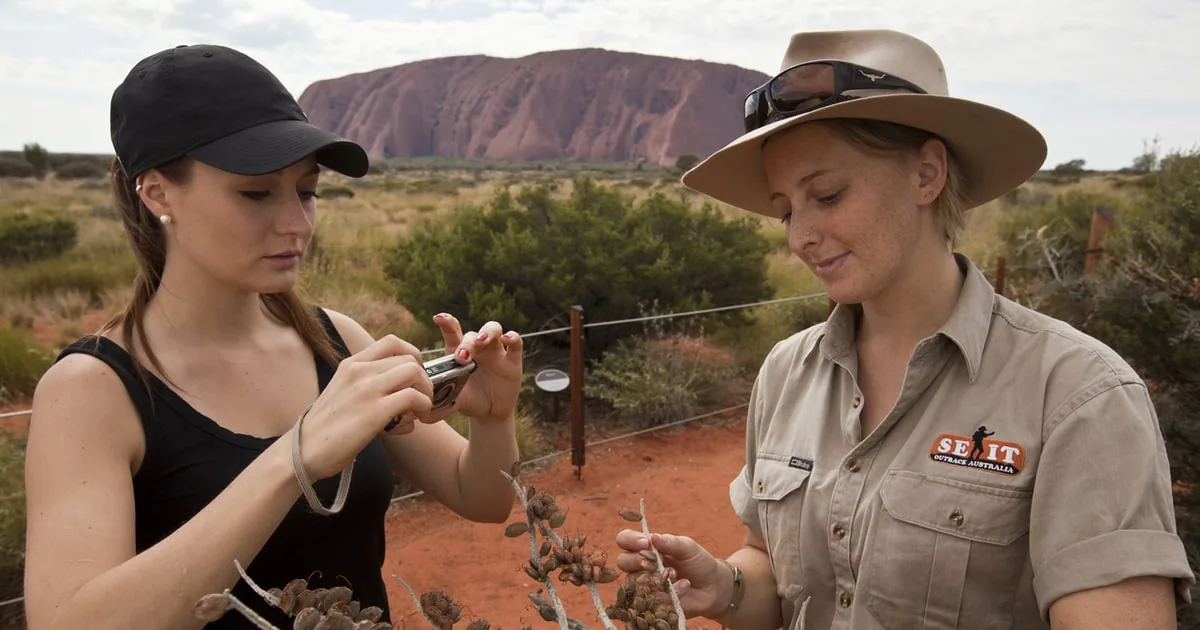
The whole loop with a guide in a group of up to 15: pickup before dawn, sunrise over the rock, then the full base walk with a picnic breakfast on the way.
Check dates for the guided base walkWhat if you can't walk the whole loop?
Walk one or two short sections, hire a bike at the Cultural Centre, or join a Segway tour. The Kuniya walk to Mutitjulu Waterhole and the Mala walk to Kantju Gorge show you the heart of the rock in under two hours combined.
The two short walks at either end of the rock are the highlights of the loop: the Mala walk (2 km return, about 1.5 hours) and the Kuniya walk to Mutitjulu Waterhole (1 km return, 30 to 45 minutes). The Mala walk is wheelchair accessible, and with a car you can do both before a late breakfast.
Bikes are hired at the Cultural Centre, and the base walk track is shared with cyclists, so you can ride the full loop in much less time than it takes to walk. For people who cannot manage 10 km on foot, a Segway tour covers a longer stretch of the base with little effort, then adds short guided walks on foot. If you only want sunrise and the waterhole, the three-hour highlights tour described in the best walks guide is a gentler morning.
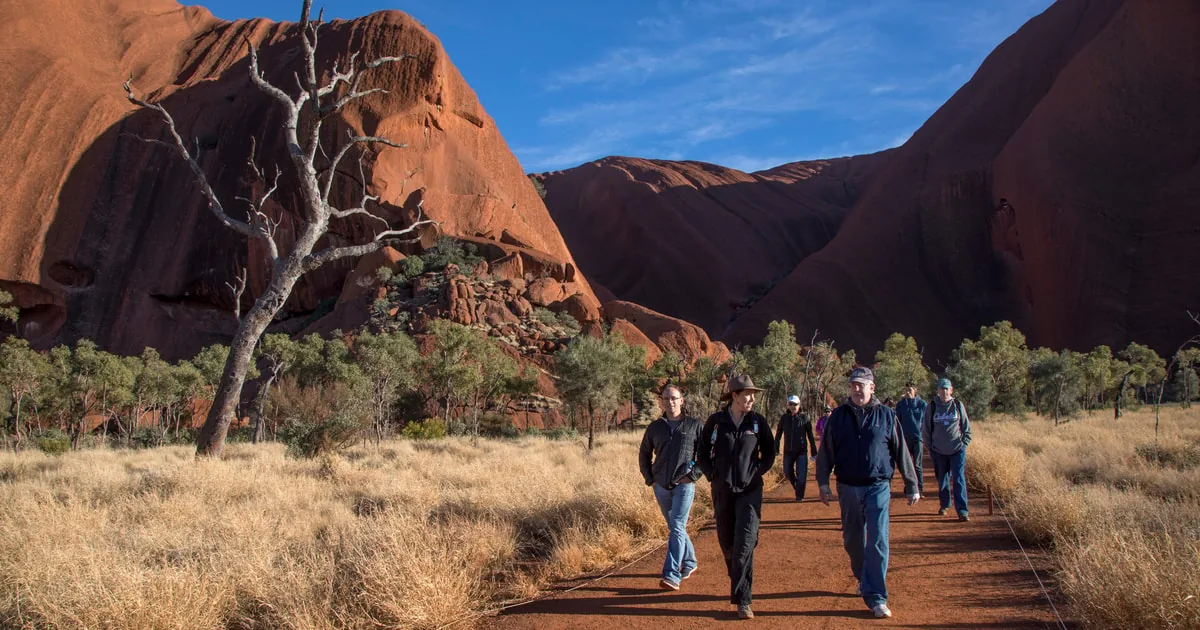
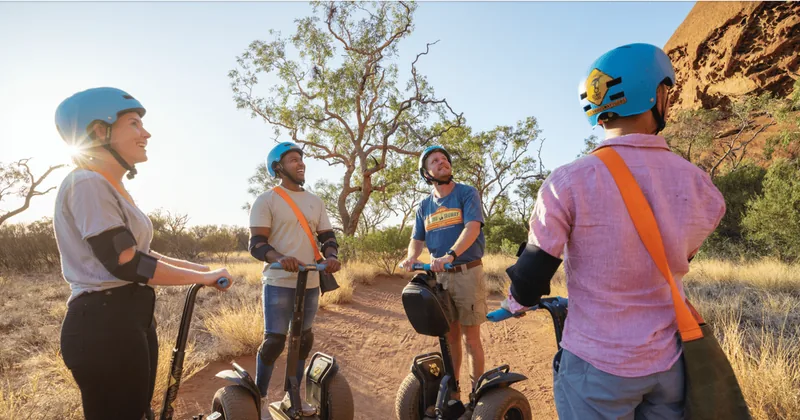
The Segway and walking tour starts with about 30 minutes of training, then an hour's guided ride along roughly a quarter of the base, followed by a guided walk into Mutitjulu Waterhole and along the Mala walk. Reviewers call it a good choice for anyone who cannot walk the whole loop, and remind you that there is still some walking.
Explore the Segway and walking tourHow long would it take to drive around Uluru?
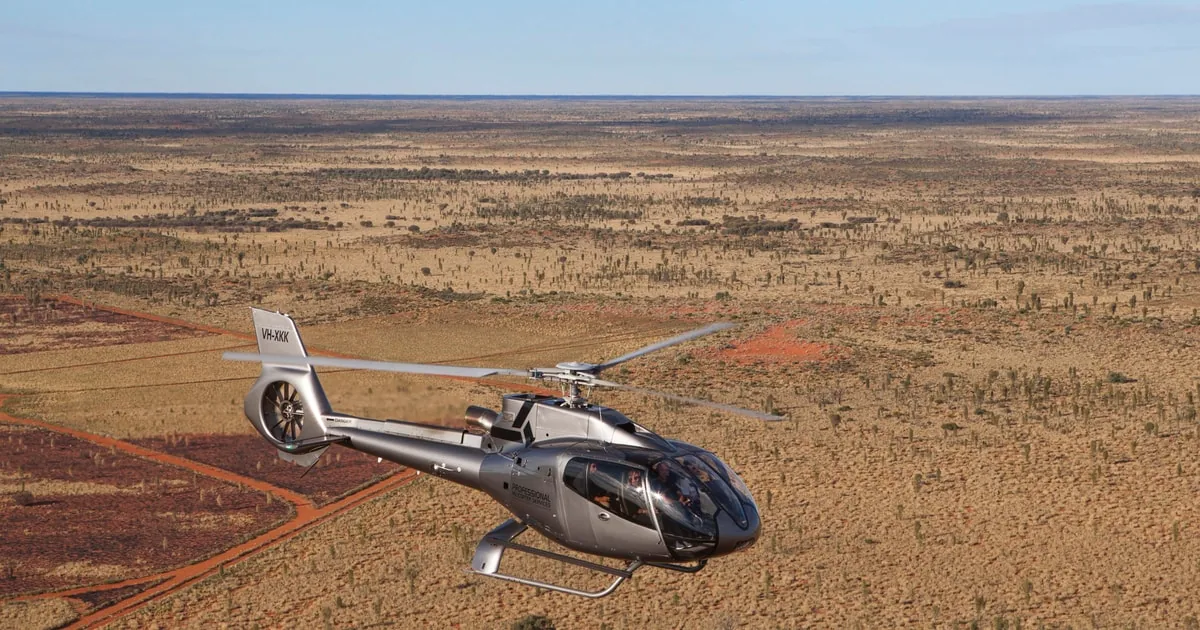
Roughly 25 minutes without stops on the sealed ring road that circles the rock, and an hour or more once you pull in at the Mala and Kuniya carparks. Driving is a good way to see the rock's changing shape before or after you walk.
The ring road runs around the rock at a distance, with turn-offs to the Mala and Kuniya carparks and to the sunset viewing areas. All park roads are sealed and fine in a two-wheel-drive hire car, and the Cultural Centre is on the main road in, about 10 to 15 minutes from the entry station. A lap by car suits a hot afternoon when walking is not sensible.
One note for 2027 and 2028: Parks Australia plans upgrades to the base walk, with a wider track, new boardwalks and a new alignment on the Lungkata section. These are planned upgrades from 2027; check park alerts on uluru.gov.au or at the Cultural Centre before you go. If you are deciding how many mornings to give the rock, how many days at Uluru has sample plans.
Sunrise from the coach, then a guided walk through the Mala walk, Kantju Gorge and the Lungkata section, with a light breakfast halfway and hotel pickup.
Check dates for the sunrise and base walkFrequently asked questions
Is the Uluru base walk suitable for children?
Yes, for children who are used to walking a few kilometres. The track is flat, and families often split it: the Mala walk one morning and the Kuniya walk to Mutitjulu Waterhole another. Carry plenty of water for them and start at sunrise. Reviewers on the sunrise walk brought a toddler in a carrier; a sturdy pram also copes with the track in dry weather.
Do I need a park pass for the base walk?
Yes. A park pass is required for everyone 18 and over, bought online or at the entry station; it covers 3 days. Under-18s don't need a park pass. Guided day tours do not include it, so buy it before your tour.
Can you walk around Uluru in the afternoon?
From May to September, yes, as temperatures are mild. From October to March, avoid it: the park strongly recommends not walking after 11 am.
Ready to book
Choose your walk
Check your date and the live price on GetYourGuide; the refund terms are shown on each option.
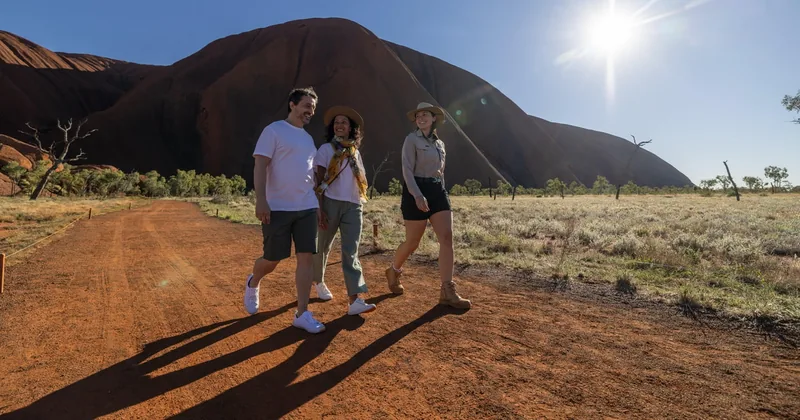
Uluru Base Walk: Small-Group Guided Trek
- The full walk around the base of Uluru with a guide
- Sunrise viewing before you start walking
- Picnic breakfast with tea and coffee
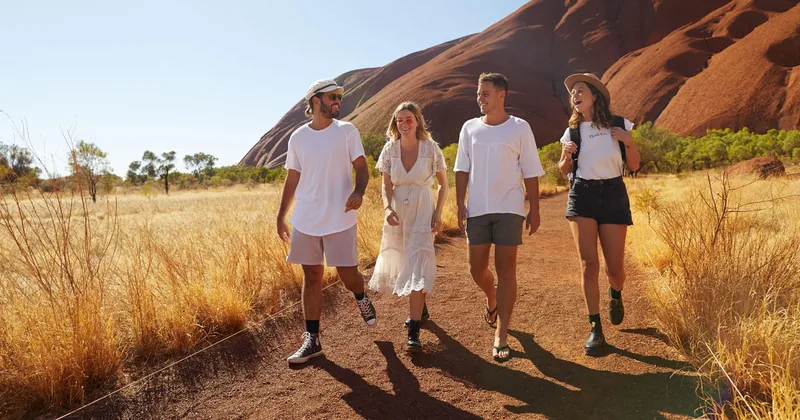
Uluru Sunrise & Guided Base Walk
- Sunrise viewing, then the walk around the base
- Mala Walk, Kantju Gorge and the Lungkata story
- Light breakfast with hot drinks
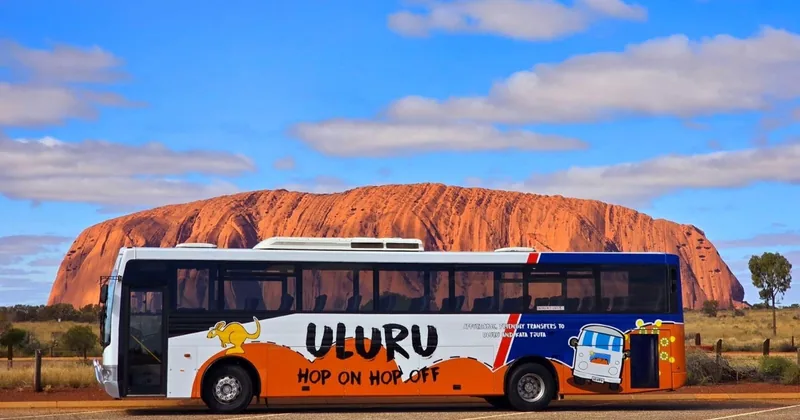
Uluru & Kata Tjuta Hop On Hop Off Pass
Shuttle rides to the rock all day, plus Kata Tjuta: walk the base on your own terms