Booking choice: The hop on hop off pass, ★ 4.5 (151). Check dates Compare the options below
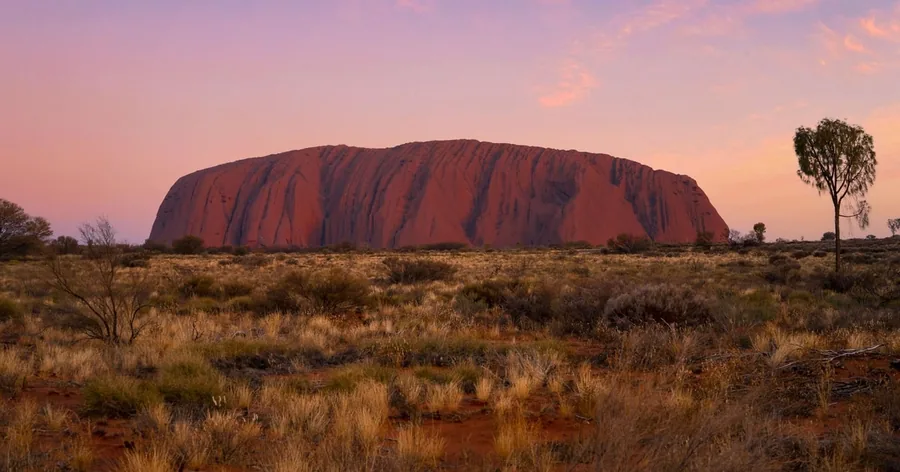
Uluru-Kata Tjuta National Park is bigger than it looks on a map. Uluru is about 20 minutes' drive from the resort at Yulara, Kata Tjuta about 45 minutes, and the best light comes at sunrise and sunset, while the hot middle of the day is often best spent out of the sun. That rhythm of two outings a day, one at dawn and one at dusk, is what decides how many days you need.
This guide gives you a straight answer, then one, two and three-day plans with the walks in a sensible order, the day trip from Alice Springs and the three-day camping tour, how to get around without a car, and why a trip here costs more than you might expect. The walks themselves are compared in the best walks at Uluru and Kata Tjuta; flights and distances are in getting to Uluru.
The quick answer
Plan three days (two or three nights at Yulara), as the park recommends. Day 1: sunrise, the 10.6 km base walk (about 3.5 hours), the Cultural Centre and sunset at Uluru. Day 2: sunrise and the Valley of the Winds or Walpa Gorge at Kata Tjuta. Day 3: sunrise at Talinguru Nyakunytjaku, the ranger-guided Mala walk, rest, and the Field of Light after dark. One day covers Uluru only. A day trip from Alice Springs means about 465 km on the road each way. Without a car, use the Hop On Hop Off pass or tours with hotel pickup.
How many days in Uluru is enough?
Three days is enough for most people, and it is what the park itself recommends. Two days cover Uluru and Kata Tjuta at a brisk pace; one day covers Uluru only.
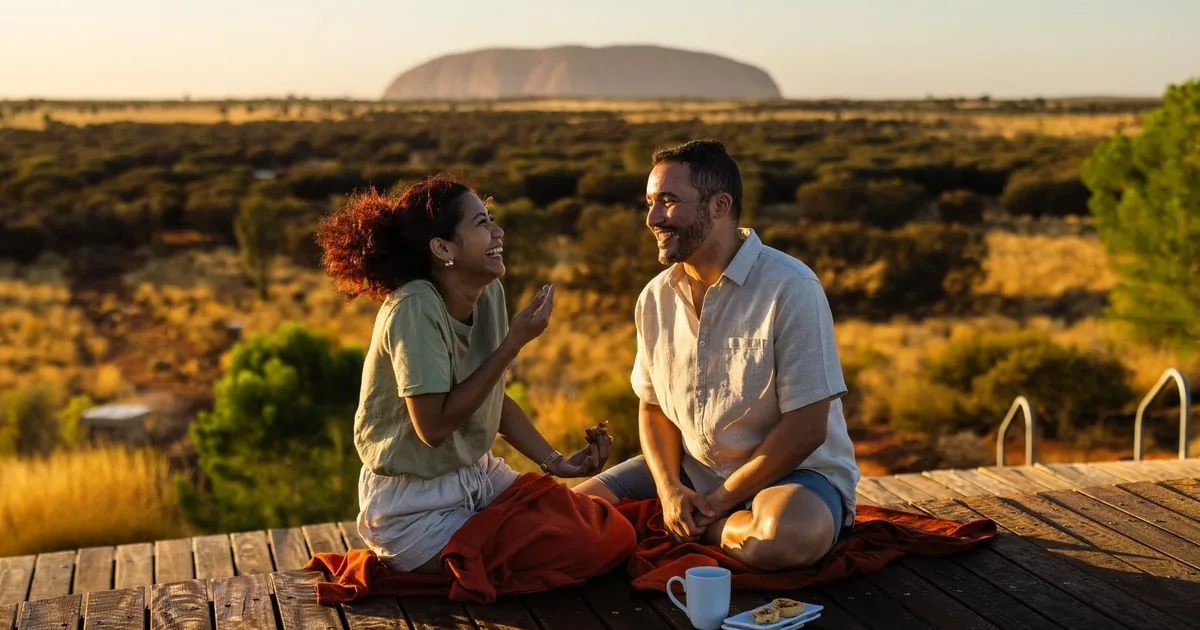
Three days give you three sunrises and three sunsets, which is the real measure of a stay here, and room for the heat: from October to March you walk in the early morning and rest in the afternoon. A park pass is required for everyone 18 and over, bought online or at the entry station, and it covers 3 days, so a three-day stay fits it exactly. Arrive in the afternoon and you can see your first sunset on arrival day. The table shows the three days, plus what to keep when time is short.
| Plan | Morning | Middle of the day | Evening |
|---|---|---|---|
| Day 1: Uluru | Sunrise, then the base walk clockwise from the Mala carpark, or the ranger-guided Mala walk | The Cultural Centre (allow 2 hours), lunch, rest out of the sun | The Kuniya walk to Mutitjulu Waterhole, then sunset at an Uluru sunset viewing area |
| Day 2: Kata Tjuta | Sunrise at the Kata Tjuta dune viewing area, then the Valley of the Winds or Walpa Gorge | Back to the resort to rest | Sunset at the Kata Tjuta sunset viewing area, or at Uluru again |
| Day 3: a slower day | Sunrise at Talinguru Nyakunytjaku with the Minymaku and Watiku walks | The Liru or Lungkata walk, or a scenic flight; rest | The Field of Light or Wintjiri Wiru after dark |
| One day only | Sunrise and the base walk | The Cultural Centre | Sunset at Uluru |
| Two days only | Day 1 as above; on day 2, sunrise and a walk at Kata Tjuta | Rest | Sunset from the viewing area you missed on day 1 |
Can you do Uluru in one day?
Yes, if you sleep at Yulara the night before or after: sunrise, the base walk, the Cultural Centre and sunset fill one long, satisfying day. What does not fit is Kata Tjuta, a further 45 minutes' drive from the resort.
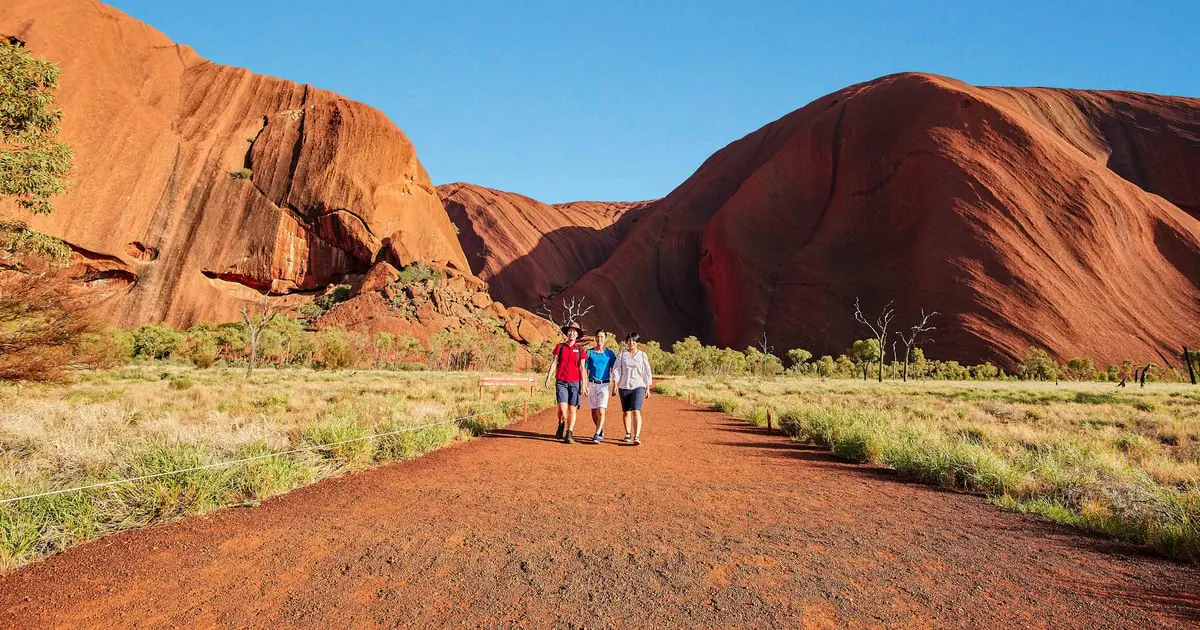
Leave the resort in the dark to be at Talinguru Nyakunytjaku, about 30 minutes away, for sunrise. Then start the base walk clockwise from the Mala carpark: 10.6 km, about 3.5 hours (allow 3 to 4), flat, with water stations, finished by 11 am in the hot months. If the full loop is too much, join the ranger-guided Mala walk instead: it runs daily at 8 am from October to April and 10 am from May to September, is 2 km return, and is included with your park pass, with no booking needed.
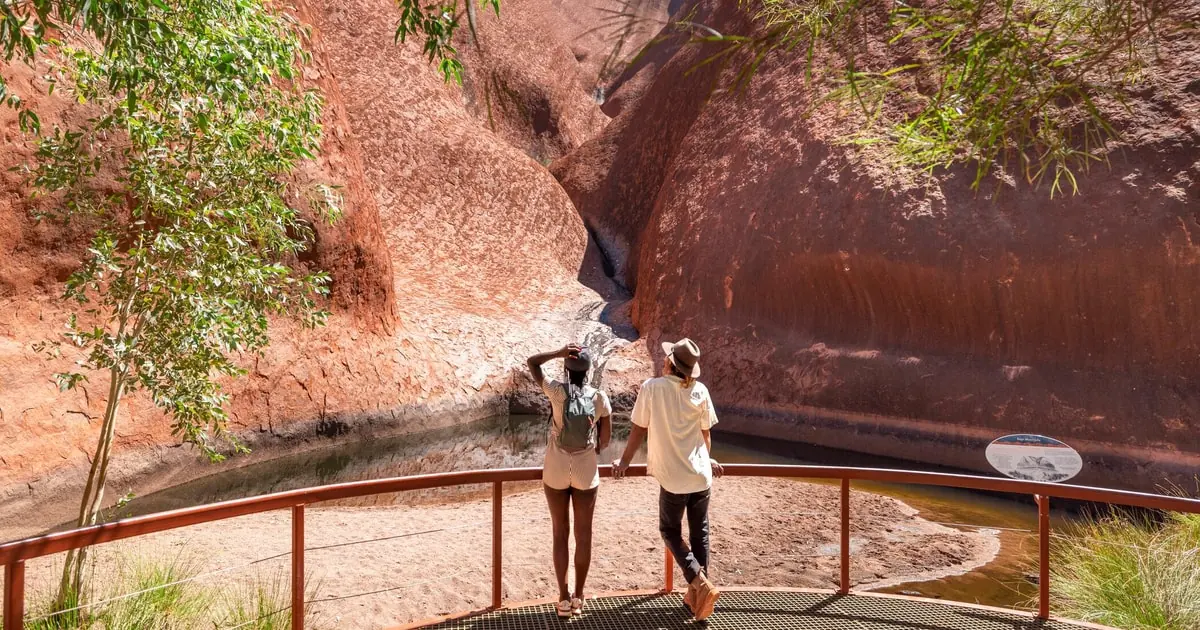
Spend the middle of the day at the Cultural Centre, on the road to the rock, with its galleries, cafe and information desk, then rest at the resort. Late in the afternoon, walk the Kuniya walk to Mutitjulu Waterhole if you skipped it, 1 km return and quieter near sunset, and finish at the sunset viewing area. Flying in and out on the same day is possible only when schedules line up, and it leaves you a few hours at the rock with no sunrise; arrive the afternoon before if you can. The full loop is described in the Uluru base walk guide.
What does a two-day plan with Kata Tjuta look like?
Give Uluru the first day and Kata Tjuta the second, with sunrise at the Kata Tjuta dune viewing area and a morning walk between the domes. Keep the full Valley of the Winds for cooler days and Walpa Gorge for hot ones.
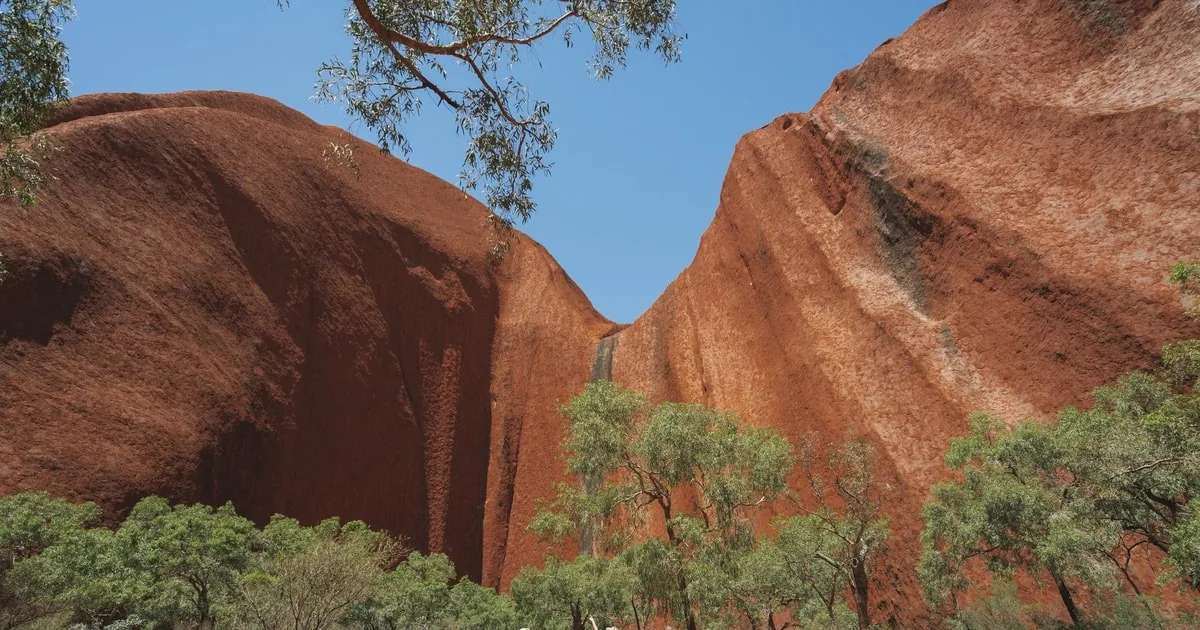
Kata Tjuta is a group of 36 domes, the tallest 546 m above the plain, about 45 minutes' drive from the resort. The Valley of the Winds is graded 4 throughout: the Karu Lookout is 2.2 km return (about 1 hour), the Karingana Lookout 5.4 km return (about 2.5 hours, with many steps), and the full circuit 7.4 km, about 4 hours. The park notes that the full loop is actually easier than walking to the second lookout and back. There is water at the start and halfway, and no toilets. Walpa Gorge is 2.6 km return, about 1 hour, on a rocky path between two of the highest domes.
On days of 36 °C or hotter, the Valley of the Winds closes beyond Karu Lookout from 11 am, so in the warm months start at sunrise or choose Walpa Gorge. Rest at the resort around midday and go out again for sunset. With the Hop On Hop Off pass, the 1 and 2-day passes include one return trip to Kata Tjuta.
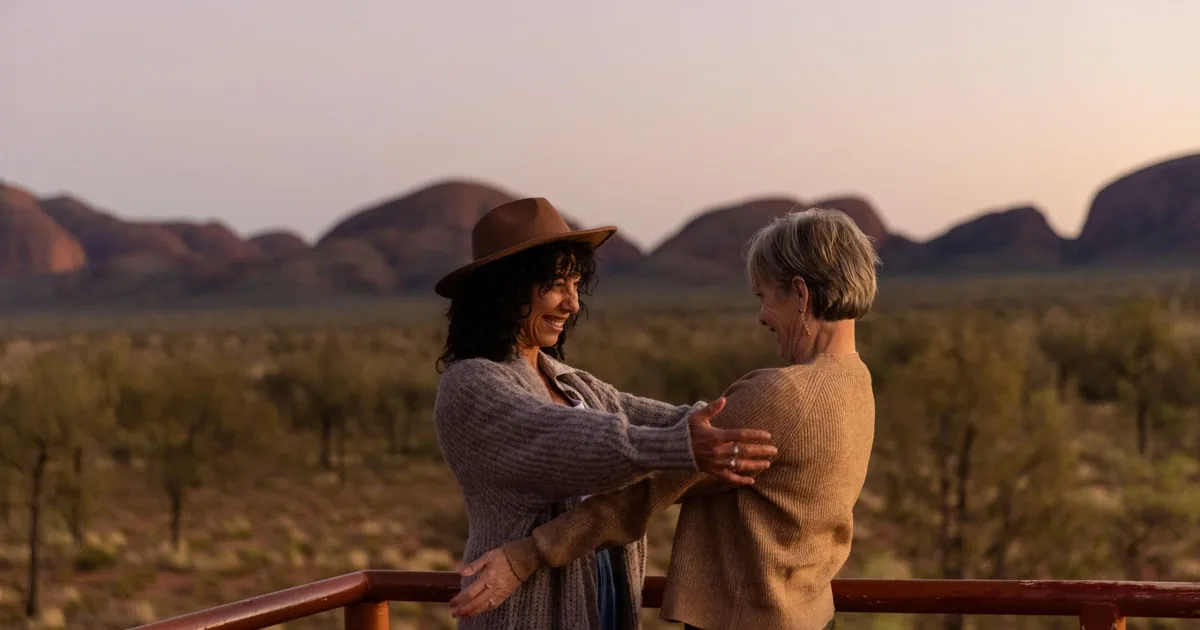
Day one taken care of: a guide leads the full base walk from sunrise in a group of up to 15, with an outback picnic breakfast and pickup from the resort hotels.
Check dates for the guided base walkWhat do you add with a third day?
Time. A third day lets you walk the Valley of the Winds in full, see sunrise from Talinguru Nyakunytjaku, join the ranger-guided Mala walk, and rest in the afternoon before an evening at the Field of Light or Wintjiri Wiru.
- Talinguru Nyakunytjaku: about 30 minutes from the resort, the one sunrise area with views of both Uluru and Kata Tjuta. Two short loops start here: the Minymaku walk (1 km, about 30 minutes) about women's work and bush foods, and the Watiku walk (1.5 km, about 45 minutes) about men's tools and hunting with fire. Both are wheelchair accessible and open to everyone.
- The walks you skipped: the Liru walk, 4 km return from the Cultural Centre to the base of the rock through mulga woodland; the Lungkata walk, 4 km return along the south side, where the track runs close enough to touch the rock; or the ranger-guided Mala walk if you did the full loop on your own.
- Evenings: the Field of Light, about 50,000 solar-lit stems in the dunes (extended beyond its 10th anniversary in 2026; check dates when booking), or Wintjiri Wiru, the Mala story told with more than 1,000 drones, lasers and light.
A third day also gives you a spare if a 40 °C day or a storm moves a walk. How the months compare is in the best time to visit Uluru.

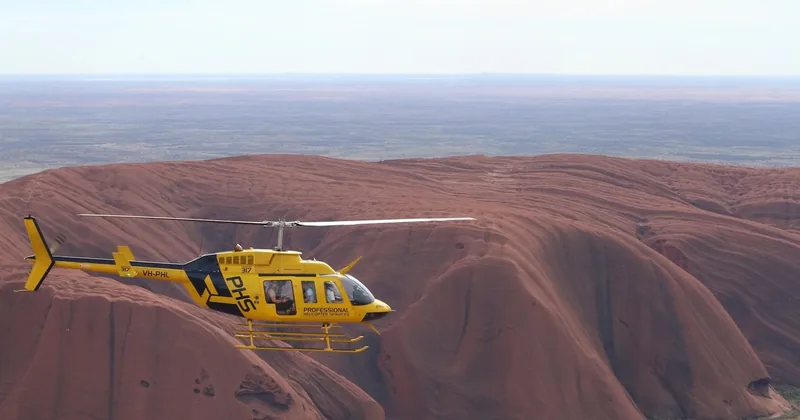
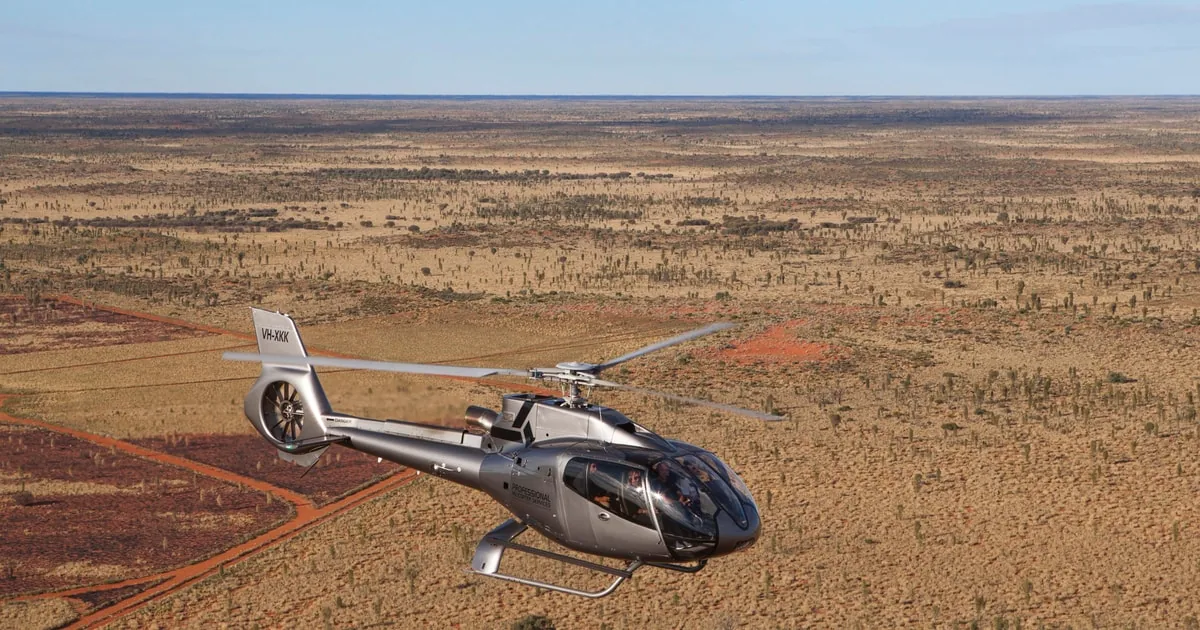
The 15-minute helicopter flight leaves from the resort and circles over the red top of Uluru, with bubble windows for photos. It suits the rest afternoon of a three-day stay, when your legs have done enough walking, and shows you in minutes how the rock and Kata Tjuta sit in the plain.
Explore the helicopter flightCan you visit Uluru on a day trip from Alice Springs?
Yes, but it is a very long day: Uluru is about 465 km from Alice Springs, 5 to 5.5 hours' drive each way, so day tours leave early in the morning and return late at night. It works if Alice Springs is your only base; otherwise stay at least one night at Yulara.
A day tour from Alice Springs picks you up early, stops at the Erldunda roadhouse, breaks for lunch at Yulara, visits the Cultural Centre and leads a guided walk at the base of the rock, then serves a barbecue dinner with sparkling wine at sunset before the long drive back. Reviewers call it a full day out, with nearly 5 hours on the road to get there.
What you give up is sunrise, the full base walk and Kata Tjuta. If you have two days rather than one, a better plan is to drive or take a tour from Alice Springs, sleep at Yulara, and see sunrise and the base walk the next morning before heading back. The drive itself is covered in getting to Uluru.
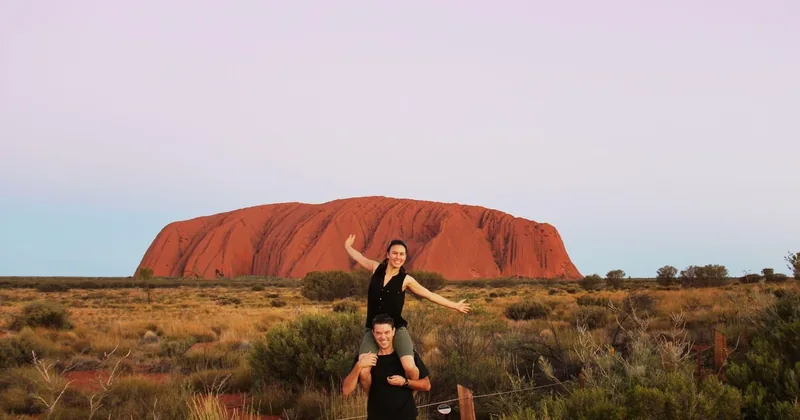
The day tour from Alice Springs is the most-reviewed trip in this guide: a roadhouse stop at Erldunda, lunch at Yulara, the Cultural Centre, a guided walk at the base of Uluru and a sunset barbecue with sparkling wine before the drive back. Reviewers say to expect a very long day and to bring a fly net; the park pass is not included, so buy it before the tour.
Explore the day trip from Alice SpringsIs a three-day camping tour a good way to see Uluru?
For many people it is the easiest way to fit Uluru, Kata Tjuta and Kings Canyon into three days: transport, meals, park entry and guided walks are all arranged, and you sleep in swags under the stars.
The camping tour starts and finishes in Alice Springs or at Yulara and runs for three days, with two or three nights in swags, the canvas bedrolls of the outback, at camps with basic shared facilities. A sleeping bag is included; reviewers suggest bringing a pillow. All meals are included, and so are the park entry fees, which makes it the only tour in this guide where you don't buy the park pass separately. The guided walks cover the base of Uluru, Kata Tjuta and Kings Canyon, a sandstone gorge roughly 300 km from Yulara that most short stays never reach.
It suits travellers who don't drive or don't want to, people travelling alone who like company, and anyone who wants the wider Red Centre in one go. It is not for you if you want a hotel bed or a slow pace: days start early and the drives are long.
Uluru, Kata Tjuta and Kings Canyon in three days, with swag nights, all meals and park entry included, starting from Alice Springs or Yulara.
Check dates for the 3-day camping tourWhy does a trip to Uluru cost so much?
Because it is remote: one resort town supplies almost every bed, meal and tour near the park, a small number of flights serve it, and there are no taxis or public transport. Booking early and using the self-guided walks keep the trip within reach.
- Distance: the nearest town, Alice Springs, is about 465 km away by road, so food, fuel and supplies travel a long way.
- One resort town: Ayers Rock Resort at Yulara holds all the hotels near the park, from Longitude 131 and Sails in the Desert to Desert Gardens, Emu Walk, Lost Camel, the Outback Hotel and Lodge and the campground. Camping inside the park is not allowed, and the next place to stay is Curtin Springs, about 100 km away.
- Few flights: direct flights come from Sydney, Melbourne and Cairns (check current schedules), and there will be fewer once Virgin Australia's Brisbane and Melbourne routes end from 25 October 2026.
- No public transport: without a car you rely on tours or the shuttle pass, and hire cars book out.
There are good ways to spend less. Book flights and beds early, especially for winter and the school holidays. The campground and the Outback Hotel and Lodge are the budget beds. The self-guided walks and the ranger-guided Mala walk are included with your park pass, under-18s don't need a park pass, and all park pass income goes back into the park. The Hop On Hop Off pass and a shared hire car are the budget ways in, and a private tour costs more than a small-group or coach tour.
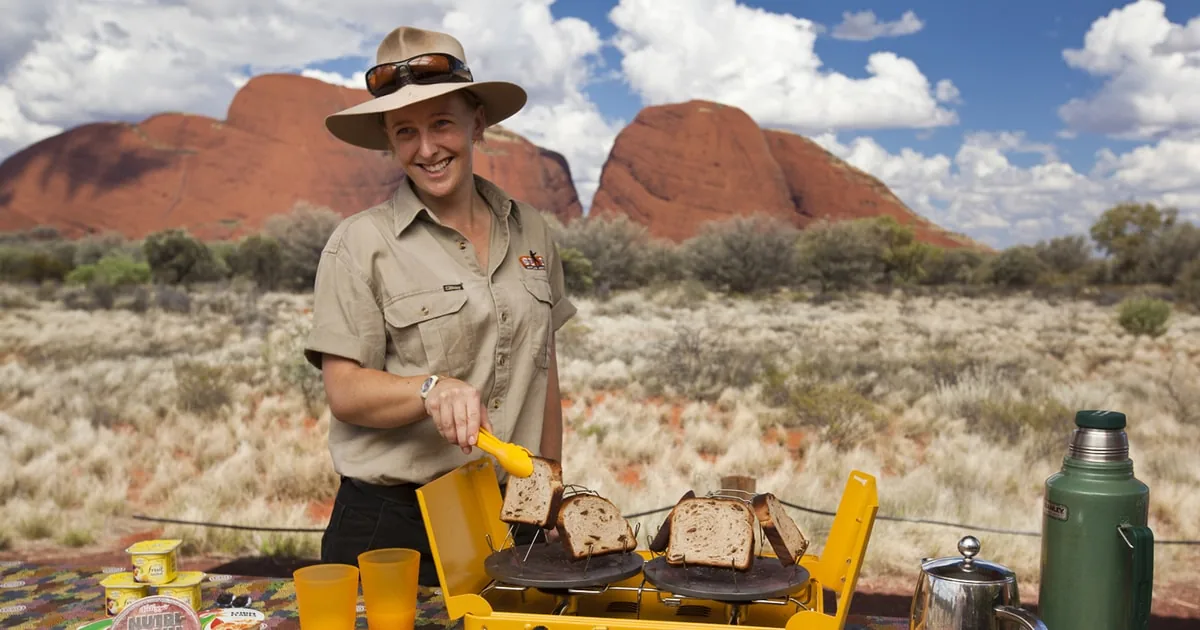
How do you get around on a short stay without a car?
With the Hop On Hop Off pass, tours with hotel pickup, or both. There are no taxis or public transport at Uluru, and walking from the resort to the rock is not an option: it is about 20 minutes away by road.
The Uluru Hop On Hop Off pass comes as a 1, 2 or 3-day pass, with unlimited transfers between the resort hotels and Uluru from sunrise to sunset. The 1 and 2-day passes include one return trip to Kata Tjuta, the 3-day pass two. Park entry and food are not included. Reviewers call it the only way out to the rock and Kata Tjuta without a car or a guided tour, and mention helpful drivers who run on time. A 3-day pass mirrors the 3-day park pass.
A good mix is the shuttle for the self-guided walks and sunsets, plus one guided tour with pickup for the stories. Inside Yulara, the resort shuttle loops between the hotels and Town Square. Every transport option, including hire cars, is compared in getting to Uluru, and the tours side by side on the homepage.
Unlimited trips between the resort and Uluru from sunrise to sunset, with a return trip to Kata Tjuta included: the budget way to follow a 1, 2 or 3-day plan.
Check dates for the hop on hop off passFrequently asked questions
Is 2 days enough for Uluru and Kata Tjuta?
Yes, for the highlights: the base walk, sunrise and sunset at Uluru on day one, and sunrise with a walk at Kata Tjuta on day two. You will be up before dawn both days and have little spare time, so a third day is worth it if you can add one.
How many nights should I stay at Yulara?
Two or three. Two nights give you one full day plus parts of the days you arrive and leave; three nights give you three relaxed days with room to rest in the afternoons and a spare if the weather turns.
Should I do the base walk on my first morning?
If the forecast is hot, yes: do the longest walk on the coolest morning. In winter the order matters less. Starting with a guided walk on day one helps too, because you learn the Tjukurpa stories before you walk the other tracks on your own. See the Uluru base walk guide.
Does the park pass cover several days?
Yes. A park pass is required for everyone 18 and over, bought online or at the entry station, and it covers 3 days; an annual pass is also available. Under-18s don't need a park pass.
Ready to book
Choose your walk
Check your date and the live price on GetYourGuide; the refund terms are shown on each option.
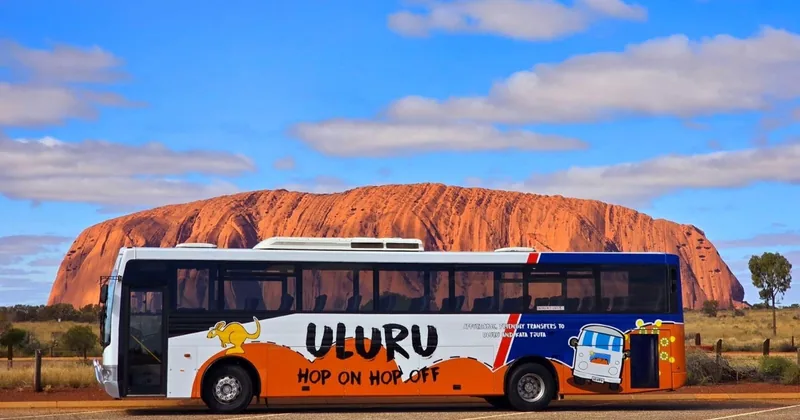
Uluru & Kata Tjuta Hop On Hop Off Pass
Shuttle rides to the rock all day, plus Kata Tjuta: walk the base on your own terms
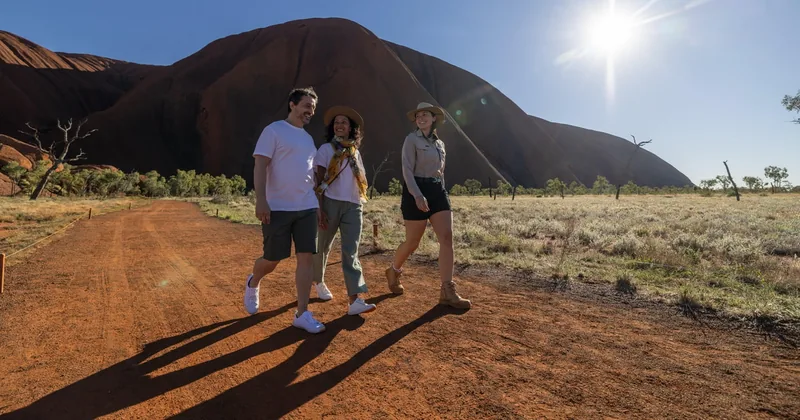
Uluru Base Walk: Small-Group Guided Trek
- The full walk around the base of Uluru with a guide
- Sunrise viewing before you start walking
- Picnic breakfast with tea and coffee
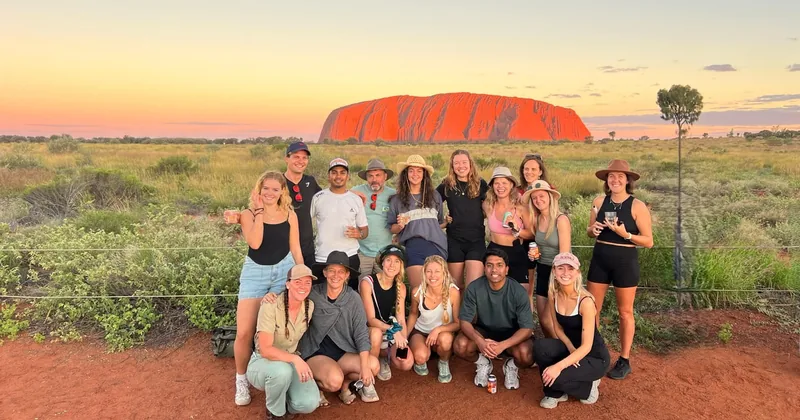
Uluru, Kata Tjuta & Kings Canyon Camping
Swag camping, all meals, park entry and guided walks at all three rocks