Booking choice: The Uluru highlights morning, ★ 4.7 (279). Check dates Compare the options below
Uluru-Kata Tjuta National Park is owned by Anangu, the Traditional Owners, and run jointly by them and Parks Australia. Most of its rules come from two places: the Tjukurpa, the law that guides Anangu life, and Australian environment law, the EPBC Act. That is why some rules feel familiar (stay on the tracks, no pets) and others are particular to this place (no photos at certain sites, wide shots only of one face of the rock).
This guide answers the questions visitors ask most: what you need at the gate, when the park opens, what happened to the climb and what happens if someone tries it now, whether you can touch the rock, what you can photograph, and the rules on alcohol, camping, swimming and pets. For what to see on the walks themselves, see the Uluru base walk and the best walks at Uluru and Kata Tjuta.
The quick answer
You need a park pass if you are 18 or over; buy it online or at the entry station, and it covers 3 days (under-18s don't need a park pass). The gates open between 5 am and 6:30 am and close between 7:30 pm and 9 pm depending on the month, and everyone must leave by closing time. The Uluru climb closed permanently on 26 October 2019 at the request of Anangu; climbing is now an offence under the EPBC Act and rangers can issue penalties. You can touch the rock where the open tracks run beside it, especially on the Lungkata section, but stay on marked tracks, don't step onto boulders and never touch rock art. Signs mark culturally sensitive sites where photos are not allowed, the north-east face is photographed only in wide shots, drones are banned, and you should ask before photographing people. Alcohol is allowed only at the Uluru car and bus sunset areas; there is no camping, swimming or pets in the park.
What are the current rules for visiting Uluru?
Carry a valid park pass, arrive and leave within the gate hours, stay on the marked tracks, respect the signs at sensitive sites, and follow the heat advice. The climb is closed, drones are banned, and there is no camping, swimming or pets in the park.
- Park pass: required for everyone 18 and over; it covers 3 days, and an annual pass is also available.
- Gate hours: the park is open every day of the year, from early morning to evening, with hours that change by month (table below).
- Stay on the tracks: walk only on marked tracks and do not step onto rock formations or boulders.
- No climbing: the Uluru climb has been closed since 26 October 2019.
- Sensitive sites: no photos or filming where the signs say so, and no entering fenced or signed areas.
- No drones: drones and other remote-controlled devices are banned without a permit.
- Alcohol: only at the Uluru car and bus sunset viewing areas.
- No pets, no camping, no swimming in the park's waterholes.
- Heat: carry and drink at least 1 litre of water per person per hour, and obey heat closures on the tracks.
None of this makes a visit complicated. In practice you buy your pass, drive or ride to the rock, and follow the signs, which are clear and placed where you need them.
Do you need a park pass, and when are the gates open?
Yes: a park pass is required for everyone 18 and over, bought online or at the entry station, and it covers 3 days. The gates open between 5 am and 6:30 am and close between 7:30 pm and 9 pm, depending on the month.
You can buy the pass online before you arrive and show it on your phone or on paper at the entry station, where a pre-paid lane with a QR scanner saves time at sunrise. You can also buy it at the entry station itself. It is valid only for this park, it covers Uluru, Kata Tjuta and Talinguru Nyakunytjaku, and the park says all pass revenue goes back into the park. Under-18s don't need a park pass. Guided day tours do not include the pass, so buy it before your tour; multi-day camping tours that include park entry say so on the listing.
The gate hours follow the sunrise and sunset, so you can always reach a viewing area for first light. All visitors must be out of the park by closing time, which matters if you stay for sunset at Kata Tjuta, about 45 minutes from the resort. The Cultural Centre keeps its own hours, 7 am to 5:45 pm every day.
| Month | Gates open | Gates close |
|---|---|---|
| January | 5:00 am | 9:00 pm |
| February | 5:00 am | 9:00 pm |
| March | 5:30 am | 8:30 pm |
| April | 5:30 am | 8:00 pm |
| May | 6:00 am | 7:30 pm |
| June | 6:30 am | 7:30 pm |
| July | 6:30 am | 7:30 pm |
| August | 6:00 am | 7:30 pm |
| September | 5:30 am | 7:30 pm |
| October | 5:00 am | 8:00 pm |
| November | 5:00 am | 8:30 pm |
| December | 5:00 am | 9:00 pm |
What happens if I climb Uluru?
You would be breaking the law. Since the climb closed on 26 October 2019, attempting to climb Uluru is an offence under the EPBC Act; rangers can issue penalties, and serious cases can go to court.
The Uluru climb closed permanently on 26 October 2019 at the request of Anangu. The park states plainly that attempting to climb is a breach of the EPBC Act, Australia's national environment law, and that penalties will be issued. Rangers patrol the rock and can issue infringement notices on the spot. The chain that marked the old route was removed after the closure.
For visitors, nothing about a walking trip changes. Every walk in the park stays at ground level, and the best experiences at Uluru were always at its foot: the waterholes, the gorges, the rock art and the stories. The full loop around the rock is described in the base walk guide, and it is the walk the park and Anangu invite you to do.
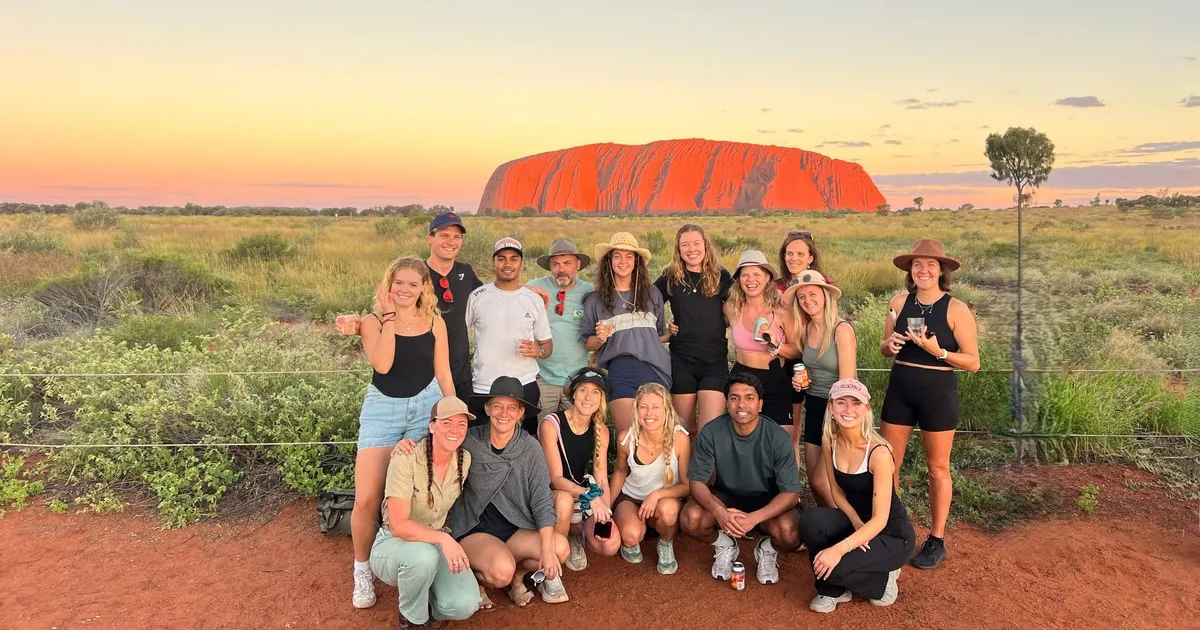
Why was the Uluru climb closed?
Because Uluru is sacred to Anangu and climbing it is not permitted under Tjukurpa, and because the share of visitors climbing had fallen below the threshold the park's management plan set for closing it. The Board of Management voted unanimously in November 2017.
Anangu had long asked visitors not to climb. The park's management plan set out conditions for closing the climb, one of which was that fewer than 20 per cent of visitors were climbing. When that point was passed, the Board of Management, which has a majority of Aboriginal members nominated by the Traditional Owners, voted unanimously in November 2017 to close it.
The date chosen, 26 October 2019, was the 34th anniversary of Handback: on 26 October 1985 the title deeds to the park were handed to Anangu at Mutitjulu, and Anangu leased the park back to the national parks agency for 99 years. The last day of climbing, 25 October 2019, drew long queues; since the next morning, the walks around the base have been the way everyone experiences the rock.
Can you still touch Uluru?
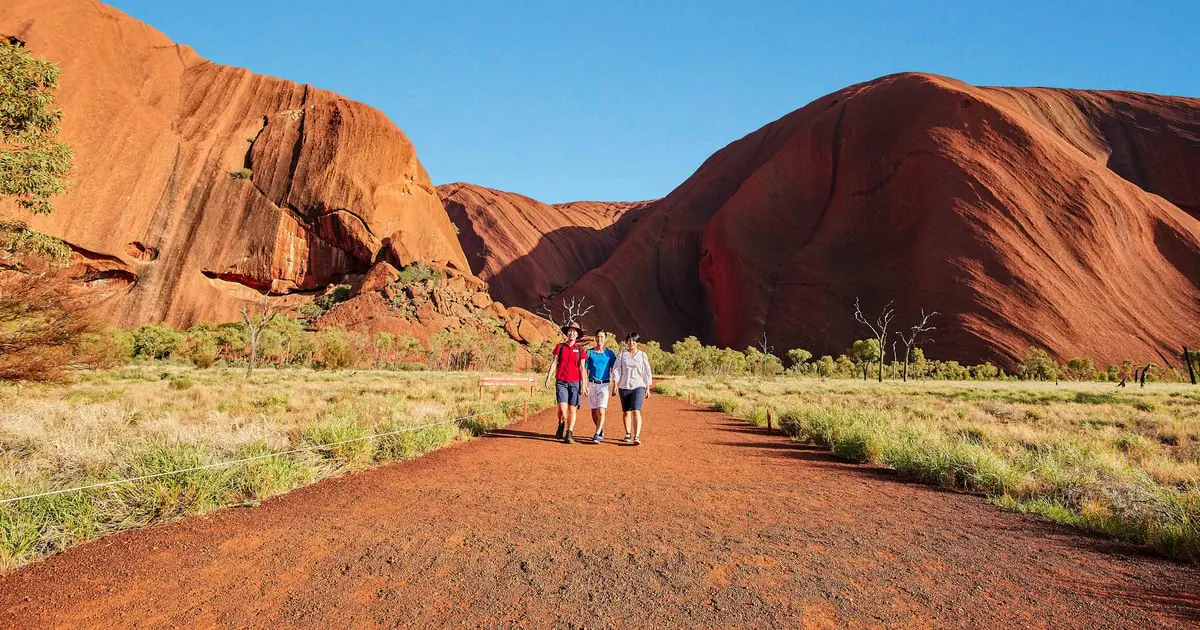
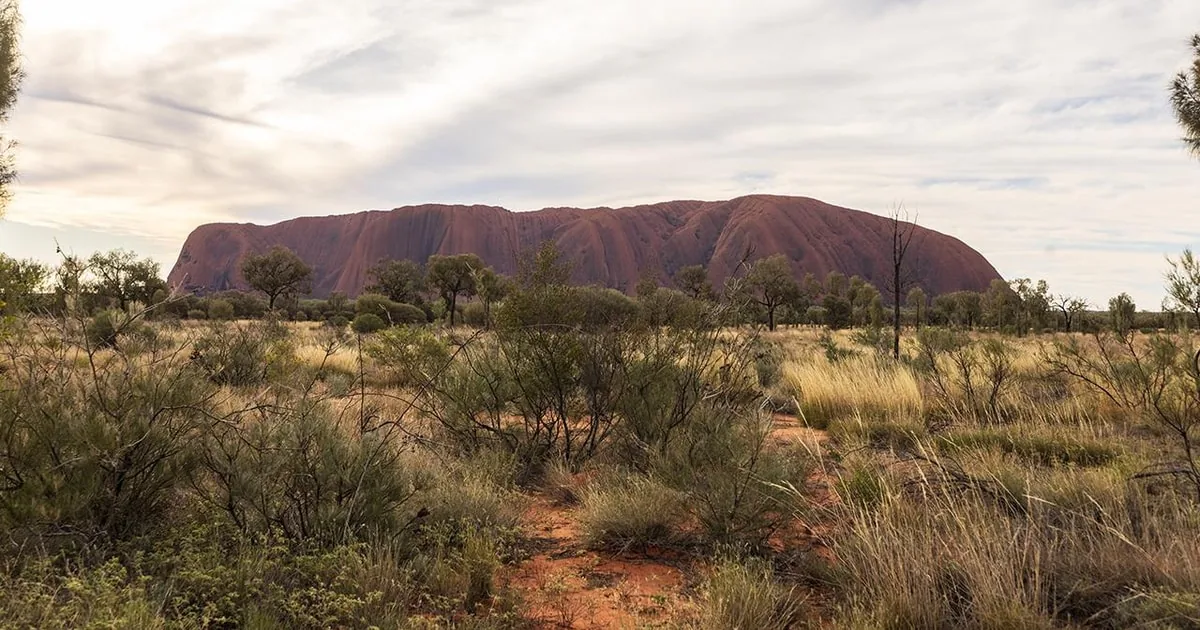
Yes, where the open tracks run beside the rock. The park's own Lungkata walk page invites you to touch the rock and feel its textures. Do not touch rock art, do not step onto boulders, and do not enter fenced or signed areas.
- Where you can: along the open tracks, where the rock is within reach of the path. The Lungkata section on the south side runs closest to the rock and is the best place for it.
- Rock art: never touch the paintings in the caves and shelters, even lightly. The oils in your skin damage them.
- Boulders and formations: stay on the marked tracks and do not step or sit on rock formations or boulders at the foot of the rock.
- Sensitive sites: sacred sites, ceremonial sites, burial grounds and homes are closed to visitors. Signs and fences mark them; do not go past them.
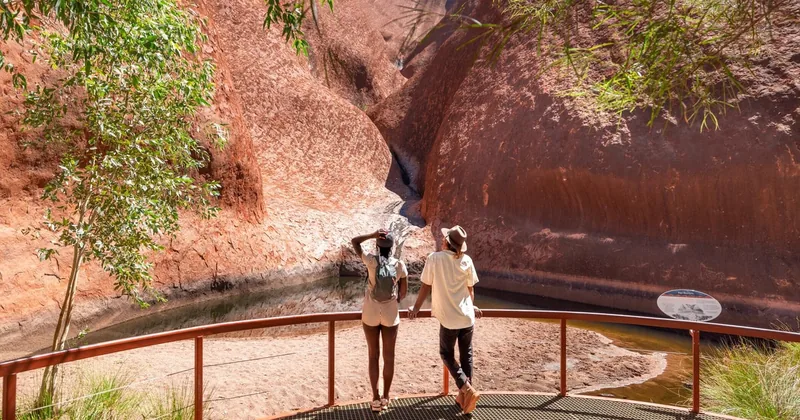
- Mutitjulu Waterhole: admire it from the viewing area and do not touch or enter the water.
- Rocks and plants: take nothing away with you, not even a pebble.
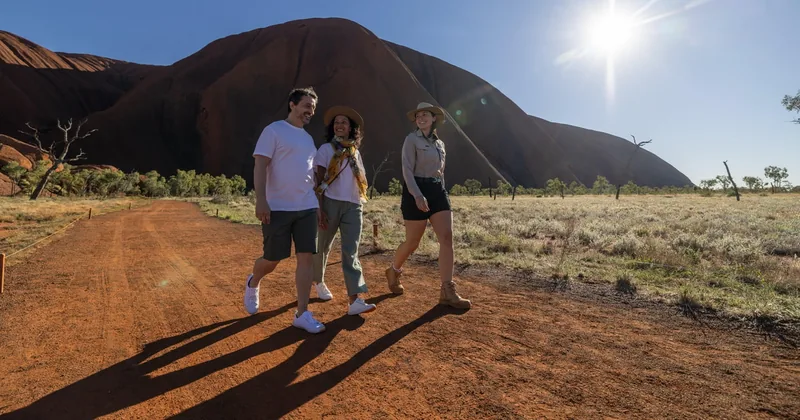
A guide will show you where touching the rock is welcome and explain what the marks on its surface mean. The small-group guided base walk (4.8 from 270 reviews) walks the full loop with that kind of commentary, starting at sunrise.
The full base walk with a guide who explains the rock, the rules and the stories as you go, with sunrise and a picnic breakfast.
Check dates for the guided base walkCan you take photos at Ayers Rock?
Yes, almost everywhere, but not at the culturally sensitive sites marked by signs, and only in wide shots of the north-east face. Always ask before photographing people, and do not fly a drone: drones are banned in the park.
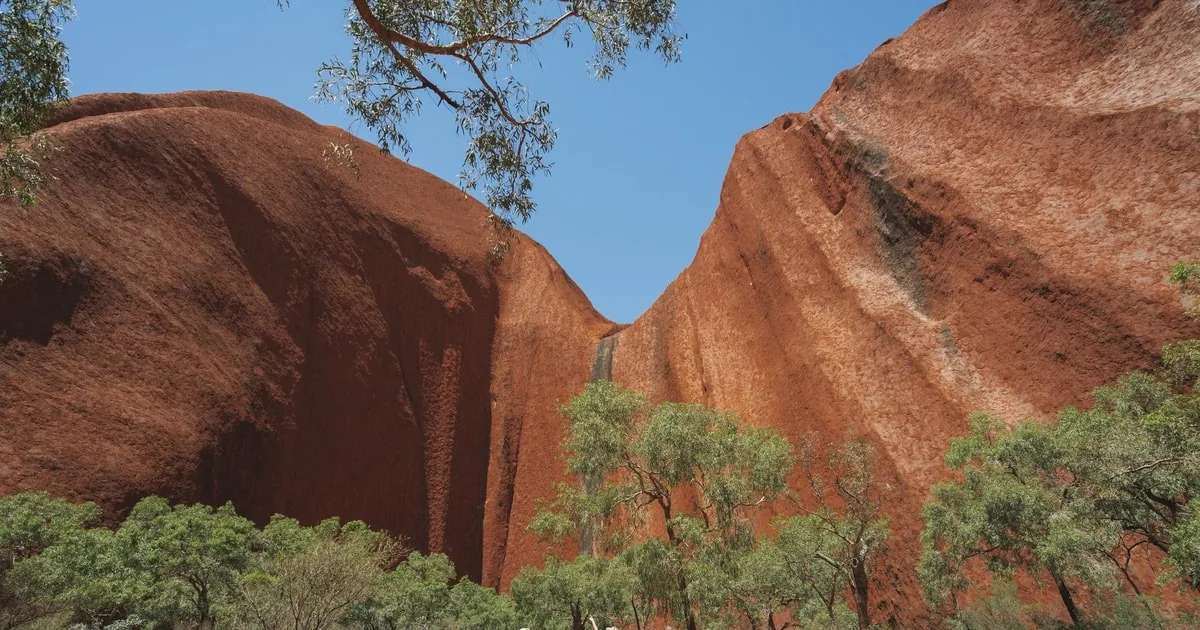
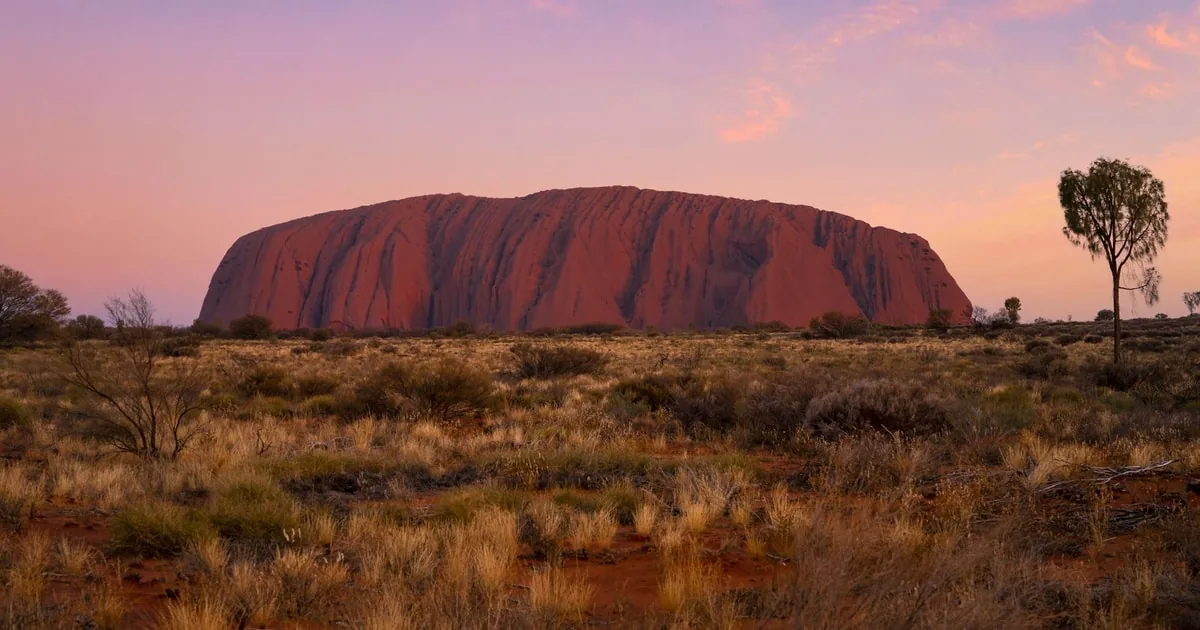
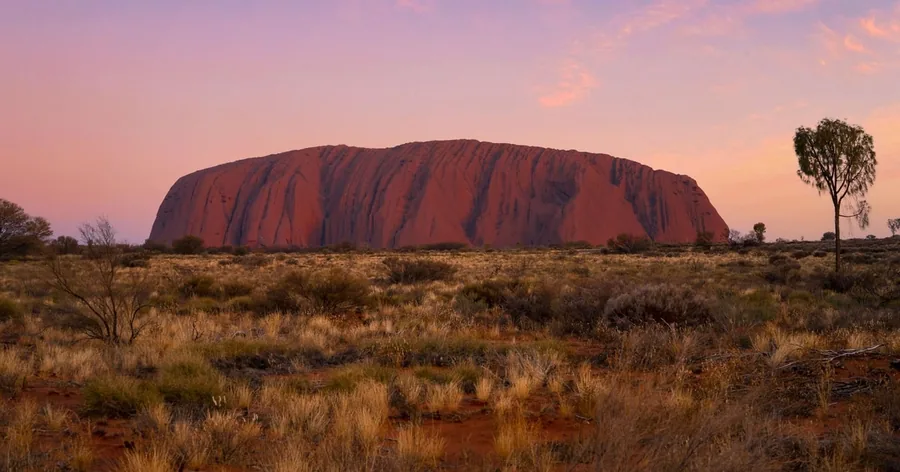
Signs mark culturally sensitive sites where photos are not allowed; put the camera and phone away there. They are spread around the rock and include places that look ordinary to a visitor. In those zones you may photograph plants, animals and people, but avoid the rock formations. Anangu also ask that the north-east face is only photographed in wide shots from a distance, without the details on its upper left side; this applies from the resort, from the air and from the viewing areas too. At Walpa Gorge, keep both sides of the gorge in frame.
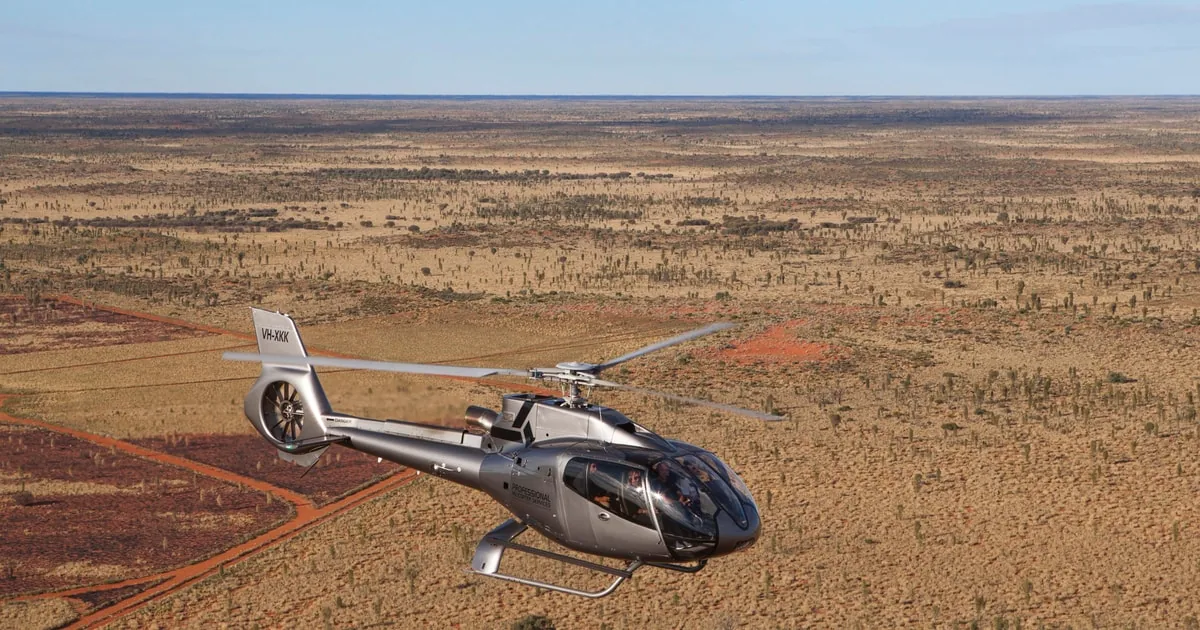
Ask before photographing Anangu or anyone else, including at the Cultural Centre. Drones and other remote-controlled devices are banned under the EPBC Act, and penalties apply. Commercial photography and filming needs a media permit from the park. If you want the view from above, a scenic flight is the way to get it.
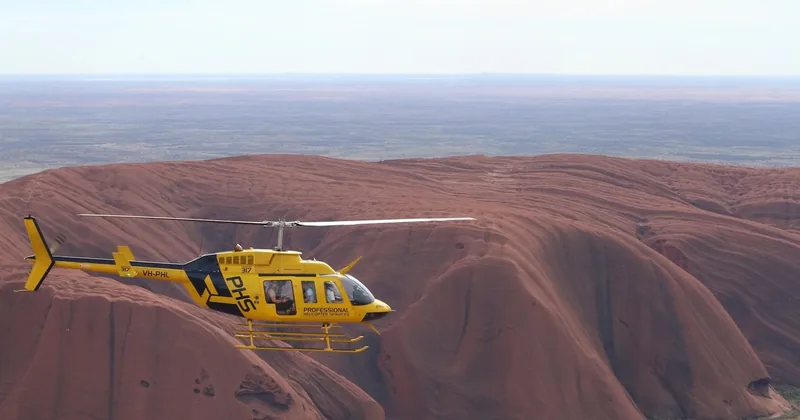
A 15-minute helicopter flight from Yulara takes you over the red top of Uluru with bubble windows for photos, with a coach pickup from the resort. It fits a rest day between walks and gives you the aerial view that drones are not allowed to capture.
Explore the helicopter flightCan you drink alcohol, camp, swim or bring a dog?
Alcohol only at the Uluru car and bus sunset viewing areas. No camping inside the park, no swimming in the waterholes and no dogs, apart from assistance dogs on a short lead with documentation.
Alcohol is allowed in the park only at the Uluru car sunset and bus sunset viewing areas, which is where sunset tours serve sparkling wine; take everything away with you. Camping is not permitted inside the park. The nearest campground is Ayers Rock Campground at Yulara, about 10 minutes from the gate, and the next option is Curtin Springs, about 100 km east. Swimming is not permitted in any park waterhole, including Mutitjulu, which is a precious water source for wildlife.
Dogs and other pets are not allowed in Commonwealth national parks; assistance dogs are allowed on a lead of 3 m or less with documentation, and dogs can stay at Ayers Rock Campground. Vehicles stay on the sealed roads, all fine for a two-wheel-drive, and bikes are allowed on the base walk track. For a short, guided morning with the key sights and a picnic breakfast, the Uluru highlights tour (4.7 from 279 reviews) watches sunrise, walks to Mutitjulu Waterhole and drives around the rock in 3 hours.
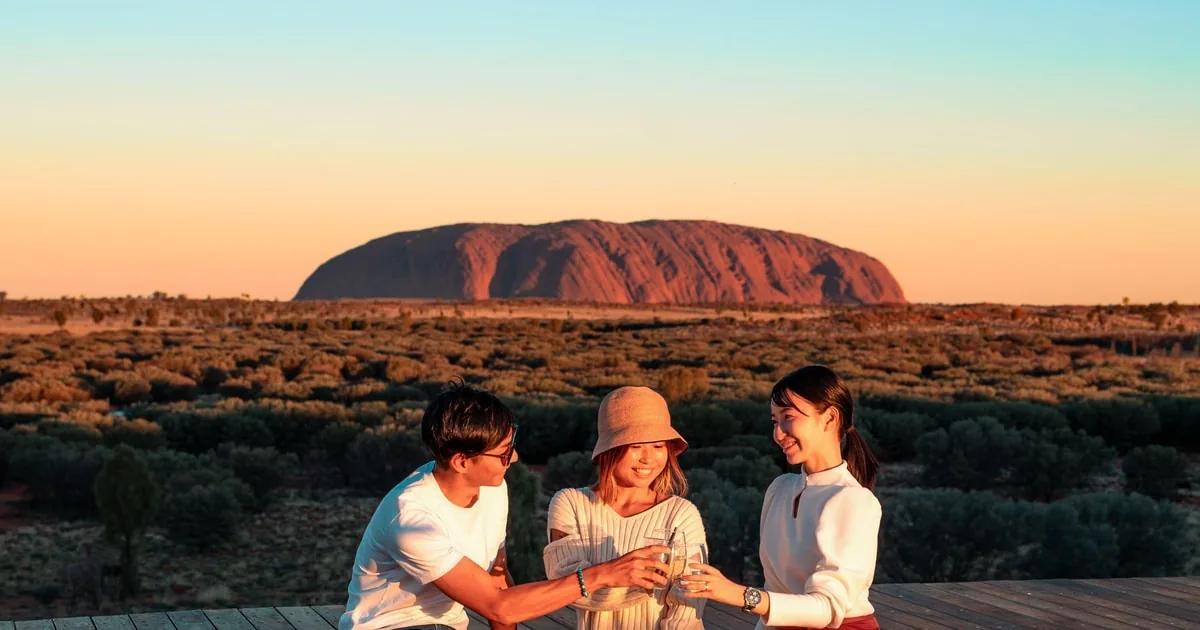
Sunrise, a picnic breakfast and the short walk to Mutitjulu Waterhole with the Kuniya and Liru story, then a drive around the rock: 3 hours in a small group.
Check dates for the Uluru highlights morningIs it called Uluru or Ayers Rock?
Uluru. The official name has been Uluru / Ayers Rock since 2002, and Uluru is the name Anangu use and the one the park uses. Ayers Rock is still understood, and the resort and airport keep it.
The explorer William Gosse, the first non-Aboriginal person to see the rock, named it in 1873 after Sir Henry Ayers, then Chief Secretary of South Australia. In 1993 it became the first dual-named feature in the Northern Territory, as Ayers Rock / Uluru, and in 2002 the order was reversed to Uluru / Ayers Rock at the request of the regional tourism association in Alice Springs. The same year as the dual naming, 1993, the park took its current name, Uluru-Kata Tjuta National Park. Kata Tjuta, once called the Olgas, means many heads.
The park is also World Heritage listed twice: for its natural values in 1987 and as a cultural landscape in 1994. That double listing is why the rules protect both the rock and the culture around it. To hear the stories behind the rules from Anangu themselves, spend time at the Cultural Centre; the Culture and Kata Tjuta Trails day (4.9 from 19 reviews) includes it with a guided Walpa Gorge walk and part of the base walk. For when to plan all this, see the best time to visit Uluru.
Walpa Gorge at Kata Tjuta, time at the Cultural Centre and a guided partial base walk including the Kuniya walk, with pickup from the resort.
Check dates for the culture and Kata Tjuta dayFrequently asked questions
Is it disrespectful to visit Uluru?
No. Anangu welcome visitors and want people to learn about the place; the Cultural Centre and the signs on the walks were made for that. What they ask is that you walk around the rock, not on it, respect the signed sensitive sites and ask before photographing people.
Do children need a park pass?
No. Under-18s don't need a park pass. Everyone 18 and over needs one, bought online or at the entry station.
Can you fly a drone at Uluru?
No. Drones and other remote-controlled devices are banned in the park under the EPBC Act, and penalties apply. Commercial filming needs a media permit; ask the park before you plan any aerial work.
Can you stay in the park overnight?
No. Camping is not permitted in the park, and everyone must leave by the gate closing time. Stay at Ayers Rock Resort in Yulara, which includes a campground, about 10 minutes from the gate.
Ready to book
Choose your walk
Check your date and the live price on GetYourGuide; the refund terms are shown on each option.
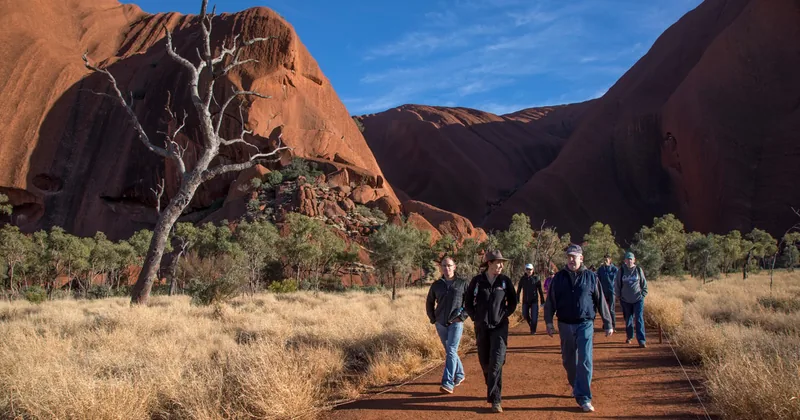
Uluru Highlights Morning & Breakfast
Sunrise, breakfast and the short walk to Mutitjulu Waterhole, then a drive around the rock
Uluru Culture and Kata Tjuta Trails
Walpa Gorge, the Cultural Centre and the Kuniya Walk to Mutitjulu in one day
Uluru Base Walk: Small-Group Guided Trek
- The full walk around the base of Uluru with a guide
- Sunrise viewing before you start walking
- Picnic breakfast with tea and coffee